

Jury in Louth murder trial told task is not to punish or sympathise
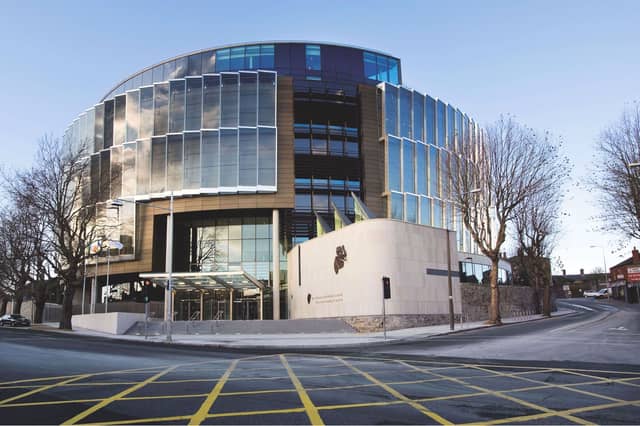

Judge in trial of Louth triple murder accused, Robert O’Connor, tells jury at the Central Criminal Court in Dublin, that individual could not but be "shocked and revulsed" by three killings but their task not "an exercise in punishing anyone"
The presiding judge in the trial of Robert O'Connor, who is accused of murdering his parents and younger special needs brother at their Co Louth home, has told the jury that an individual could not but be "shocked and revulsed" by the three killings but that their task was not "an exercise in punishing anyone".
In his charge to the panel on Monday following the three-week trial at the Central Criminal Court, Mr Justice Mícheál P O’Higgins said two of the four possible verdicts - the special verdict of not guilty of murder by reason of insanity and not guilty of murder but guilty of manslaughter by diminished responsibility - "mark out the tramlines of the dispute" for the jurors to determine.
Robert O'Connor (32), of Drumgowna, Louth Village, Dundalk, Co Louth, has pleaded not guilty of murder by reason of insanity, or guilty of manslaughter on the basis of diminished responsibility to the triple murder of his mother Louise (56), his father Mark (54) and his brother Evan (27) at their home between September 28 and 29 2025, both dates inclusive.
The Central Criminal Court jury has been told that the accused accepts he caused the death of the three victims, who had sustained a combined 139 stab wounds.
The panel have been told by the prosecutor in her opening speech that the "battleground" between the prosecution and defence in the trial is whether Robert O'Connor was insane at the time.
In considering the psychiatric evidence, Mr Justice O'Higgins warned the jurors that they were dealing with two experts and professional consultant psychiatrists. "Neither side is saying the other expert is utterly off the beam or isn't qualified for the job or doesn't have expertise, it's not that kind of case," he remarked.
Two psychiatrists, who have given evidence in the trial, are in agreement that the accused was suffering from a relapse of schizophrenia when he fatally stabbed the three members of his family.
However, whilst both expert witnesses are of the view that guilty of manslaughter by reason of diminished responsibility under section 6 of the Criminal Law Insanity Act 2006 would be an appropriate verdict, they differ on whether the accused qualifies for a special verdict of not guilty by reason of insanity under section 5 of the act.
Consultant forensic psychiatrist Dr Fiona Toal, called to give evidence by the defence, testified that Robert did not know what he was doing was wrong and couldn't refrain from committing the act. She found that the accused met the criteria for a special verdict of not guilty by reason of insanity.
Consultant forensic psychiatrist Dr Ronan Mullaney, called to give evidence by the prosecution, has told the trial that the accused met the criteria for a verdict of guilty of manslaughter by diminished responsibility and does not meet the criteria for the special verdict of not guilty by reason of insanity.
The three criteria for a verdict of not guilty by reason of insanity under the Criminal Law Insanity Act 2006 are that an accused did not know the nature and quality of the act, or was unable to appreciate that what they did at the time was wrong or would have been unable to refrain from their actions.
Mr Justice O'Higgins said this had been a "sad and difficult case" for the panel to deal with and preside over. "One could not but be shocked and revulsed by the killings of the family members of the O'Connor family and one could not but have the deepest of sympathy for the deceased' family members and for Cian O'Connor, the surviving brother, as well as for close relatives and friends".
However, the judge told them that their task was not about sympathy. He also pointed out that this was not an exercise in punishing anyone. "This is a clinical, logical forensic exercise you are engaged in, you cannot allow prejudice or sympathy in any way to persuade you".
He told the panel that there were four verdicts they could return in relation to the murder charge against the accused, namely; guilty of murder, not guilty of murder, not guilty of murder by reason of insanity or not guilty of murder but guilty of manslaughter on the grounds of diminished responsibility.
In reality, Mr Justice O'Higgins said the psychiatric evidence in the case reduces the choice the panel have to one of two verdicts; namely not guilty by reason of insanity or guilty of manslaughter by reason of diminished responsibility.
The judge said the reality seems to be that the jurors must decide between these two verdicts; "those two verdicts mark out the tramlines of the dispute for you to determine".
"Was his mind in control or was the mental disorder in control at the material time?" asked the judge.
Mr Justice O'Higgins said neither side was contending for either of the two standard verdicts of guilty of murder or not guilty of murder, as in reality the evidence in the case would not support either.
He said for the defence to prove that the accused was legally insane at the time, the standard of proof was on the balance of probabilities. "It is open to you to make a finding of insanity if you are satisfied the accused was suffering from a mental disorder and the mental disorder was such that he ought not be held responsible".
The judge told the jury that if they were satisfied as a matter of probability on any of the three criteria under section five of the Criminal Law Insanity Act 2006, then they must return a verdict of not guilty by reason of insanity.
Referring to the "pathway to verdict" document, the judge remarked: "If you find insanity that is your job done, don't consider the next question."
However, Mr Justice O'Higgins said that if the panel was not satisfied on the balance of probabilities that the accused was legally insane at the time of the killings, then they don't return the insanity verdict under section five and instead go on to consider the alternative verdict of diminished responsibility under section six.
The judge said the jurors may wonder why they are being troubled with having to determine these issues at all when the parties are in agreement on the accused being guilty of manslaughter by reason of diminished responsibility.
"The law and our constitution say these matters are important - even in a case where psychiatric experts agree - the issue of diminished responsibility must be established by a jury drawn from the community".
Mr Justice O'Higgins went on to say that if the jurors are considering the possibility of a verdict of diminished responsibility, they must then ask themselves three questions; namely have the prosecution satisfied them beyond a reasonable doubt that the accused did the killings; are they satisfied on the balance of probabilities the accused was suffering from a mental disorder and that the mental disorder was such as to diminish substantially the accused's responsibility for the killings.
The trial continues today, when the jury of six men and six women will commence their deliberations.