

Louth's Mick Fanning joins Mayo and Dublin GAA stars for free hamstring webinar

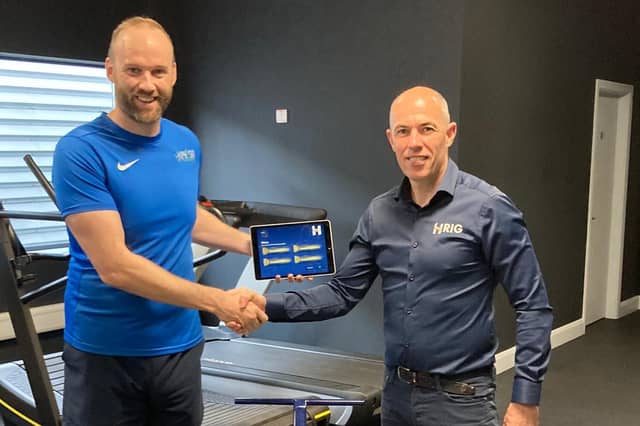

Former Louth GAA footballer and physiotherapist Mick Fanning will join Dublin’s James McCarthy and Mayo’s Cillian O’Connor for a free webinar on hamstring injury prevention and rehibilitation on Thursday, 12th November
REGISTER HERE: https://events.teams.microsoft.com/event/88b8dc44-b9b6-4b5e-8162-1dde804f8f16@a361b01d-10c0-443d-8e05-06add4043b83/registration
Former Louth GAA footballer and Naomh Máirtín championship-winning captain, Mick Fanning, will join some of Gaelic football's biggest names for a free webinar aimed at tackling one of the game's most common injuries.
The Drogheda-based physiotherapist will speak at The Hamstring Advantage on Thursday, 12th November at 8.15pm, alongside former Dublin star James McCarthy, Mayo forward Cillian O’Connor and Mayo GAA physiotherapist Dr Martin McIntyre.
Former Roscommon footballer Dr Cathal Cregg and Birmingham City senior physiotherapist Andrew Proctor complete the six-person panel, where they will examine hamstring injury prevention, rehabilitation and how players can return to football safely.
Fanning, who runs Physio Performance in Drogheda, will discuss the specialist HRIG hamstring testing technology available at his clinic and his experience treating leading inter-county footballers.
Fanning's approach has been shaped by his long involvement with Louth GAA, both as a player and physiotherapist.
When speaking with the Dundalk Democrat, he said, “Football and Louth GAA have definitely been a huge part of my life. It's something that's really shaped me, not just as a physio, but yeah, as a person.
“I played football for Louth right through the underage grades, from under 14s, under 16, minor level, and captained Louth under 20s. Then I was, I suppose, fortunate enough to represent the Louth senior football team for over 10 years.
“Then at club level I played senior football with Naomh Máirtín for nearly 20 years and was lucky enough to win a couple of senior championship medals towards the end of my career and captained the club to senior championship there in 2020, which was particularly special.
“Alongside my playing career, I've also been involved with Louth GAA over the last 10 to 12 years as a physio, working with the minor teams, under 20 teams, and more recently, the Louth senior football teams.
“I think that involvement in GAA, particularly Louth GAA over so many years, definitely gives me a unique perspective as a physio. I've been in countless dressing rooms, both as a player and as a physio.
“I understand the game, the pressure on players and how desperate it can be to get back playing, particularly when there's a big championship match coming up. I've experienced that myself as a player. I've had injuries. I've wanted to get back.
“I've made mistakes; I've pushed things too hard. But I've also been on the other side, working alongside managers, coaches, medical teams, trying to make the right decision for players.
“I suppose I've been fortunate enough to learn from some excellent players and managers and coaches. You pick up so much about leadership, teamwork, setting standards and what makes us, I suppose, a successful environment.
“I think a lot of that experience has influenced how we built Physio Performance, our clinic here in Drogheda. When you think about it, I think trying to build or create a successful football team and culture and building a successful business aren't all that different.
“You need good people around you, a shared vision, and high standards. They're constantly learning and improving. That's what we've tried to create at the clinic here in Drogheda.
“The team is passionate about physio rehabilitation, sports performance, and constantly striving to be at the forefront of what we do.
“Louth GAA has given me an awful lot over the has given me an awful lot over the years and has used influence on me as a person, a physio, and the clinic we're trying to build here.”
Injuries
Hamstring injuries will be a central topic during Thursday's webinar, with Fanning concerned about players returning to competitive action before fully recovering.
“Hamstring injuries definitely look like a significant issue in Gaelic football. They're probably one of the most common injuries you see when you're working with a Gaelic football team.
“Research backs that up as well. A recent study there into county Gaelic football showed that hamstring injuries account for nearly 25% of all reported injuries. That's nearly one in four.
“I suppose when you look at the demands of the modern game, particularly with the new rules, players are sprinting more, accelerating, there are more one-on-ones, change in direction at high speeds, and all that places huge demands on the body and particularly the hamstrings.
“I think one of the biggest challenges, especially at club level and at inter-county level, is that muscle injuries sometimes haven't always been given the respect that they deserve.
“There's always a pressure to get players back for important matches, whether that's coming from the club manager themselves or the players themselves.
“I suppose there's also an element that sometimes the initial diagnosis of the injury might not fully reflect the type or the extent of injury or the time they need to get back.
“More recently, we've seen a lot of hamstring injuries involving the hamstring tendon, which can be a little bit more complex and definitely requires longer rehabilitation and a little bit more precise and guided rehab.
“I think that's where we can run into problems where you have a player who might feel good, be running pain-free, and I think they're ready to return.
“But that doesn't necessarily mean they've recovered the strength or capacity needed for repetitive competitive football, and particularly in Gaelic football as well.
“Research shows that there is a really high recurrence rate of hamstring injuries, with some studies showing maybe one in three hamstring injuries reoccur in the first four to six weeks back.
“So I think that's where, as a physio here at Physio Performance in Drogheda, it's all about getting the diagnosis right and definitely giving these injuries the respect they deserve
“Making sure players are properly rehabilitated to the level that they need to, the demands of the sport repetitively rather than simply rushing them back for the next match.”
Technology
Fanning will also explain how the HRIG, developed following research led by Dr McIntyre, is being used to assess hamstring strength at his Drogheda clinic.
The device measures force produced by the hamstrings in positions associated with sprinting, allowing physiotherapists to monitor rehabilitation and identify strength deficits.
“I think one of the biggest changes we've seen in the physiotherapy and rehabilitation space over the last number of years is the introduction of technology that allows us to objectively measure strength and monitor rehabilitation.
“Luckily, here at Physio Performance in Drogheda we've been using the hamstring HRIG for about four years now, and we're very proud to have it available.
“We're the only kind of private physio clinic in the Leinster area with this technology, and the HRIG has been used in Premier League football clubs, professional rugby, and so it's fantastic to be able to bring that level of testing to the players here in the Louth area and beyond.
“In simple terms, the HRIG, the hamstring HRIG, allows us to measure how much force a player's hamstring can produce in certain positions, particularly the sprinting position, which is where a lot of hamstring injuries occur.
“It allows us to compare the injured and uninjured side, identify the kind of strength efforts and, importantly, track those numbers throughout the rehab.
“We also have, I suppose, normative data where we know we're elite-level footballers and players where the injury risk is low, and we can guide players to hit these numbers.
“I suppose before this a lot of it assessing would have been manual testing, looking at the movement, asking the player how they felt. While a lot of this is still important, we can put actual numbers on their strength and look at that; it's massive to the player.
“They might come in feeling great, running pain-free, thinking they're ready to return to football, but we test them, and we still see there's a strength deficit there, and I think that's what we're trying to challenge.
“I said previously maybe a high injury rate, if we can bring that down because we know they're now prepared for it.
“We can set them a target that we can reduce the risk of recurrence if we can achieve this, and it's great for players actually to be able to track their progress.
“We can show them where they started, where they are now, what they need to work on; it's kind of like small, achievable goals, which really gets buy-in and lock-in to a kind of a rehab program.
“As I said with the modern game, we want to make sure the players develop strength capacity to cope with the demands of Gaelic football; it's massive. I suppose from a visual point of view, the biggest advantage is we're taking some of the guesswork out of rehab.
“We are still using our clinical expertise, but we'll combine that now with objective measures that help us make better decisions about when a player is ready to return.”
Stars
Fanning has worked with Louth GAA players Sam Mulroy, Conor Grimes and Ciarán Downey, as well as former Dublin stars James McCarthy and John Small.
He says the HRIG helped guide the rehabilitation of the two Dublin footballers following significant hamstring injuries.
“Over the years it's been a fortunate luck to work with a wide range of elite athletes, including Louth county footballers such as Sam Mulroy, Conor Grimes, Ciarán Downey, as well as players from League of Ireland.
“More recently we've had the opportunity to work with two former Dublin greats, James McCarthy and John Small. I think between them they have 16, maybe senior All-Ireland medals between them.
“But we're dealing with a significant hamstring injury, and we're racing against time to get back to their clubs and for the club championship, and the hamstring HRIG was really valuable in their return.
“It allowed us to measure the hamstring strength, identify where the deficits were and just bring them along the process and guide them through it every step of the way.
“We probably managed to help them get back maybe three to four weeks ahead of their initial anticipated return times, which was an amazing outcome.
“Looking back, I think one of the biggest things you learn from working with players at that level is their attitude and their commitment to the process.
“You give them programmes, they'll follow it religiously; whatever exercise set or reps you prescribe, they'll do them to the letter of the law.
“Sometimes, in fact, you're really trying to hold them back because sometimes they're maybe looking to do too much or try and push things too early and too hard.
“They just have that kind of optimism, kind of growth mindset where they're constantly asking, how can I get better, how can I recover quicker, is there anything else I should be doing, is there anything I'm missing.
“The fact that they were willing to travel down to Drogheda to access the hamstring HRIG says a lot about their commitment, and you can see and just reflects naturally why they were so successful with Dublin.”
Access
For Fanning, a major benefit of the technology is making specialist assessment available to club footballers throughout Louth and Meath, rather than limiting it to elite players.
“I think the most probably the most exciting part of it for me is if you go back maybe 10 years, this type of technology was largely a source of just elite sport, Premier League football clubs, professional rugby teams.
“For the average club GAA player, getting access to that test would have been very difficult and very expensive.
“That's probably what I'm most proud of here at Physio Performance: to be able to bring that technology to Drogheda and make it available to players right across the Louth, Meath, and wider around the Leinster area.
“You don't have to be an inter-county footballer or professional athlete to benefit from it, whether you're playing senior football, junior football or just a young player trying to get back from their first hamstring injury.
“The same technology is available to you. I think that's fantastic, and you can get the same level of testing and rehab support and guidance that you'd get in, like, an elite sporting environment.
“Here at Physio Performance, our ambition has always been to be leaders at the forefront of physio and rehabilitation, and we’re bringing world-class facilities, technology, and expertise to the local area.
“It's not about getting someone out of the pain; it's about helping them to restore their strength, get back to playing the sport they love and perform at their best, and I think that's what makes having this technology available here in Drogheda so exciting.”
Mayo
Thursday's webinar will also hear from Dr McIntyre, whose research into hamstring injuries began in 2017 following his experiences treating injured Mayo footballers. The HRIG has since been used in professional sport and with Mayo's senior footballers.
Speaking to Midwest Radio, McIntyre reported that Mayo suffered just one hamstring injury during their 2026 campaign, compared with approximately 12 in a typical year.
“And we were lucky enough, we had, I think, one hamstring injury this year. And just to put that in perspective, normally you have 12 per year.”
He also outlined how the equipment helped medical staff assess fatigue and adjust training loads between matches.
The webinar will feature McCarthy discussing rebuilding hamstring strength, O’Connor sharing his experience of managing injuries, Cregg addressing team screening and injury prevention, and Proctor discussing hamstring monitoring in professional football.
For Fanning, Thursday's event is a chance to show how technology used at the highest level of sport can benefit ordinary GAA players in Louth.
The Hamstring Advantage takes place online on Thursday, 12th November at 8.15 pm and it is free and open to players, coaches, physiotherapists and anyone interested in sports injuries.
Registration is available through the HRIG Instagram page, @hamstring_rig, or via the free webinar registration link.