

Ten parties appeal against Louth development at Cú Chulainn's Castle

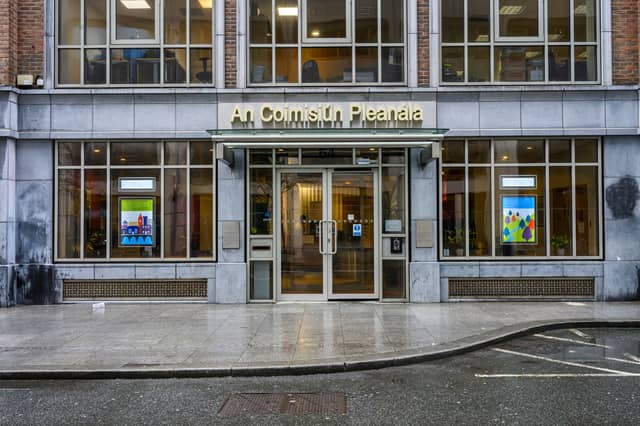

Ten separate parties lodge appeal with An Coimisiún Pleanála against housing plans
Ten separate parties, including a group of four Dundalk councillors, and the Louth Archaeological and Historical Society, have lodged appeals with An Coimisiún Pleanála (formerly An Bord Pleanála) against the decision by Louth County Council to grant planning permission for a Large-scale Residential Development of 1,025 homes on lands beside Cú Chulainn's Castle in Dundalk.
Louth County Council granted planning permission in July, subject to 51 planning conditions, to Grandspect Limited for the development at Castletown Road, Dundalk, on a site of c. 38.89ha (96.1 acres), which includes plans for a public open space of c. 5.1Ha (12.6 acres) within the residential development, including provision of a playing pitch, and the provision of a Heritage Park on the lands surrounding Cú Chulainn’s Castle to the east.
Scores of submissions had been lodged objecting to the application, as well as a petition with over 10,000 signatures being sent to Louth County Council, seeking to protect Cú Chulainn’s Castle and the surrounding landscape.
The ten parties listed by An Coimisiún Pleanála as appellants are: Sean Kelly & Andrea McKevitt; Padraig O'Cumascaigh; An Taisce; John Conway and Louth Environmental Group; Claire Brennan & Family; Seamus Roe & Co Louth Archaeological & Historical So; Padhraic Moneley; Martin and Kathleen McCaughey; Bernadette Matthews; and Nicola Bishop.
Councillors, Seán Kelly, Andrea McKevitt, Emma Coffey, and Shane McGuinness, are one of the parties who have appealed the decision.
Cllr Kelly and Cllr McKevitt are listed as third party appeallants in the appeal lodged with An Coimisiún Pleanála.
Councillors Emma Coffey and Shane McGuinness are also part of the appeal, but as Cllr Kelly and Cllr McKevitt were named in the submission made to Louth County Council on the original planning application, they were listed as appellants in the appeal.
Five Grounds of Appeal are listed in the appeal lodged by the councillors and are as follows:
Ground One - Failure to demonstrate compliance with the Louth County Development Plan.
Ground Two - Failure to demonstrate adequate protection of archaeological heritage.
Ground Three - Failure to protect landscape character and visual amenity.
Ground Four - Failure to demonstrate acceptable environmental effects.
Ground Five - Failure to demonstrate proper planning and sustainable development.
The councillors ask that An Coimisiún Pleanála allow the appeal and set aside Louth County Council’s decision to grant planning permission, and refuse planning permission for the development.
The County Louth Archaeological and Historical Society (CLAHS) has also lodged an appeal against the decision.
The Society, which was founded in Dundalk in 1903, said that it appealed the planning permission for housing around the listed monument, because it believes the proposals do not adequately protect the monument, its setting or the surrounding historic landscape.
In a statement, the Society told the Dundalk Democrat that: “Our concerns include the lack of proper provision for, and protection of, an exclusion zone during the construction phase.
“We are also concerned that the proposals for a Heritage Park and for developing its tourism potential lack sufficient detail and substance.
"In our view, this does not meet the requirements of the Dundalk Local Area Plan and the Louth County Development Plan.
“The important views and aspects of the monument have also not been adequately protected, which is another clear concern in relation to the existing planning policies.
“We are particularly concerned about the proposed removal of approximately 250 metres of historic townland boundary.
"These boundaries are an important part of the area's heritage and landscape.
“We do not believe the destruction of such a historic feature is adequate compensation for providing a site for a school which may not be built for many years, or potentially, decades.
“Our appeal is about making sure that development takes place while properly protecting the monument, its setting and the historic character of the area for future generations.”
An Coimisiún Pleanála says that the case is due to be decided by 1 December 2026.