

Dundalk councillors urge Minister intervene on Cu Chulainn's Castle

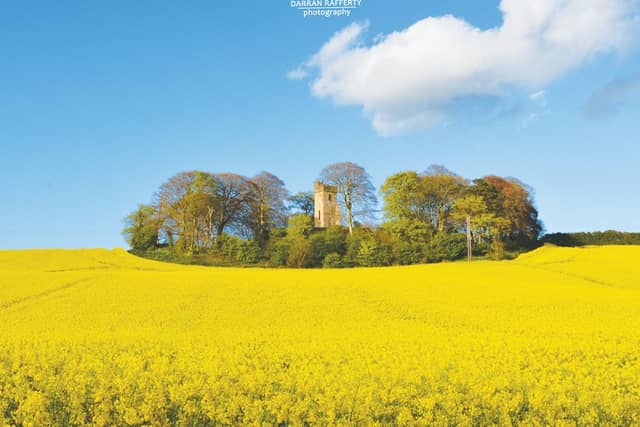

Cllr Seán Kelly, along with four other Dundalk councillors, have urged Minister for Heritage Christopher O’Sullivan to implement Special Protection Status for Cú Chulainn’s Castle
Dundalk local representative, Councillor Seán Kelly, along with Councillors Emma Coffey, Shane McGuinness, Andrea McKevitt and Robert Nash have written to Minister for Heritage Christopher O’Sullivan, urging him to act on the request by An Taisce calling for the implementation of Special Protection Status for Dún Dealgan (commonly known as Castletown Motte or Cú Chulainn’s Castle) and its surrounding historic landscape in Castletown, Dundalk.
The councillors have asked the Minister to act following the decision by Louth County Council to grant planning permission to Grandspect Limited, for a Large-scale Residential Development (LRD) or 1,058 homes on lands beside Cú Chulainn's Castle.
Grandspect Limited was granted planning permission on 22 July, for a development comprising 1,058 dwellings, consisting of 765 houses, 150 duplex units, and 143 apartment units. The 765 houses comprise 10 two-bedroom bungalows; 34 two-bedroom, two-storey houses; 547 three-bedroom, two-storey houses; and 174 four-bedroom, two-storey houses.
The development includes plans for a local centre, comprising three retail units, a community/medical unit, and the provision of a stand-alone childcare facility in a two storey building.
There was massive local objection to the planned development, with scores of submissions lodged with Louth County Council, objecting to the application, as well as a petition with over 10,000 signatures being sent to the local authority, seeking to protect Cú Chulainn’s Castle and the surrounding landscape.
An Taisce called upon the Minister O'Sullivan earlier this month to immediately grant ‘Special Protection’ status to the Dún Dealgan, Castletown monuments and historic landscape, to enhance their protection from development.
An Taisce, an authoritative and independent advocate for environmental and heritage issues, and one of Ireland’s oldest and largest environmental charities, said that as proposed, the buffer zones between the development site and monuments would be inadequate to preserve their setting and character, which would be of detriment to our vulnerable archaeological heritage.
In his letter to the Minister, Cllr Kelly added his voice to An Taisce’s call, and urged him to use his “existing statutory powers under the National Monuments Acts 1930–2014 to secure the long-term protection of Dún Dealgan (Castletown Motte/Cúchulainn Castle) and its surrounding historic landscape at Castletown, Dundalk”.
Cllr Kelly wrote: “ I note that An Taisce has recently called upon you to exercise the full range of powers available to you under the National Monuments Acts to safeguard this nationally significant archaeological and cultural landscape.
“Having carefully considered that submission, I wish to formally support that request and respectfully urge you to intervene to ensure that this unique national monument and its setting receive the highest level of protection currently available under Irish law.”
Highlighting the hostorical importance of the site Cllr Kelly told the Minister: “Dún Dealgan occupies a singular and irreplaceable place within Ireland's archaeological, historical and cultural heritage. While recognised as an important medieval motte, it is equally renowned as the traditional home and birthplace of Cúchulainn, one of Ireland's greatest legendary figures, and forms an integral part of the wider landscape associated with the Táin Bó Cúailnge.
“Its significance extends well beyond the monument itself, encompassing its archaeological setting, historic landscape, mythology, folklore, educational importance, tourism potential and enduring value to the people of County Louth and to Ireland as a whole. It is, without question, one of the country's most significant archaeological and cultural landscapes.
“The urgency of this matter has been heightened by the recent decision of Louth County Council to grant planning permission, subject to 51 conditions, for a residential development of more than 1,000 dwellings on lands immediately adjoining this nationally important heritage landscape.
“While I acknowledge that a number of planning conditions have been imposed, including a 50-metre buffer surrounding the monument, I remain concerned that these measures are insufficient to protect the wider archaeological landscape, the historic setting and the visual and cultural integrity of Dún Dealgan.
“The significance of Dún Dealgan cannot be measured solely by reference to the footprint of the recorded monument. Its archaeological importance derives equally from its relationship with the surrounding landscape, its commanding visual presence, its historic context and its enduring association with the mythology of Cúchulainn and the Táin.
“The integrity of that landscape forms an essential part of the monument itself, and any substantial encroachment has the potential to cause irreversible harm to its national significance.”
Calling on the Minister to act, Cllr Kelly requested that: “In light of these concerns, I respectfully request that you exercise the powers vested in you under the National Monuments Acts 1930–2014 to ensure that Dún Dealgan and its surrounding archaeological landscape receive the fullest protection currently available under Irish law.
“In particular, I respectfully ask that consideration be given to the exercise of the following statutory powers:*Guardianship under Section 9 of the National Monuments Act 1930, enabling the State to assume guardianship of the monument. Such guardianship would make it an offence to alter, interfere with or disturb the monument or land in its proximity without the prior written consent of the Minister.
“The making of a Preservation Order where the Minister is satisfied that the monument is in danger of injury, destruction or deterioration. Such an Order would place the monument under direct State protection and require Ministerial Consent for works capable of affecting the monument or its setting.
“The making of a Temporary Preservation Order where an immediate threat exists, thereby providing emergency protection for up to six months while comprehensive archaeological, heritage and environmental assessments are undertaken and longer-term protective measures are considered.
“The exercise of the Minister's powers under Section 12 of the National Monuments (Amendment) Act 1994, ensuring that any proposed works affecting the recorded monument or its vicinity are subject to full scrutiny by the National Monuments Service, with appropriate archaeological safeguards and Ministerial directions imposed where necessary.
“I respectfully submit that the circumstances surrounding Dún Dealgan warrant careful consideration of each of these statutory powers. The archaeological, historical, cultural and mythological significance of the site, coupled with the scale and proximity of the proposed development, present precisely the circumstances for which these legislative protections were enacted.
“I further request that your Department undertake a comprehensive assessment of the archaeological and historical landscape surrounding Dún Dealgan with a view to determining whether the existing 50-metre buffer is sufficient.
“In my respectful view, a substantially larger protected area is required to safeguard:
- the archaeological integrity of the monument and any associated archaeological remains, whether known or yet to be discovered;
- the wider historic landscape and setting that contribute fundamentally to the monument's significance;
- important archaeological features and deposits which may remain undiscovered;* the visual prominence and character of the monument within its historic landscape;
- its unique cultural and mythological associations with Cúchulainn and the **Táin Bó Cúailnge**;
- its educational, tourism and community value; and
- its preservation for the benefit of future generations.
“I fully acknowledge the pressing national need to deliver housing and recognise the importance of increasing housing supply. However, housing delivery and the protection of Ireland's most significant archaeological landscapes are not mutually exclusive objectives. Sustainable development requires that both be achieved in a balanced and responsible manner.
“Where a monument possesses exceptional national importance, the statutory protections enacted by the Oireachtas should be fully utilised to ensure that development proceeds without compromising our shared heritage. Given the recent grant of planning permission, this matter is now one of considerable urgency.
“Once development commences, there is a real possibility that the historic setting, archaeological context and cultural significance of Dún Dealgan will be permanently and irreversibly altered. It is therefore essential that every statutory protection available to the Minister be fully considered before irreversible change occurs.
“The preservation of Dún Dealgan is not solely a matter of local concern. It is a matter of national heritage. It represents one of Ireland's most iconic archaeological landscapes and occupies a unique place within our shared history, mythology and cultural identity.
“Its protection is a responsibility owed not only to the present generation but equally to future generations. I therefore respectfully urge you to exercise the powers available to you under the National Monuments Acts 1930–2014, including, where appropriate, the assumption of guardianship, the making of a Preservation Order or Temporary Preservation Order, and the application of all available statutory protections in respect of works affecting the monument and its environs.
“I further request that your Department undertake a comprehensive review of the extent of the protected archaeological landscape surrounding Dún Dealgan to ensure that it receives the full protection warranted by its exceptional archaeological, historical and cultural significance.
“The question is not whether Dún Dealgan merits protection—it unquestionably does. The question is whether the full range of statutory powers already available to the State should now be exercised to ensure that one of Ireland's most significant archaeological and mythological landscapes is preserved intact for future generations.