Search


01 Dec 2025
Search
01 Dec 2025

Please allow ads as they help fund our trusted local news content.
Kindly add us to your ad blocker whitelist.
If you want further access to Ireland's best local journalism, consider contributing and/or subscribing to our free daily Newsletter .
Support our mission and join our community now.
To continue reading this article, you can subscribe for as little as €0.50 per week which will also give you access to all of our premium content and archived articles!
Alternatively, you can pay €0.50 per article, capped at €1 per day.
Thank you for supporting Ireland's best local journalism!


The jury at the Stardust inquest have started hearing a summary of some of the key evidence outlined in the almost year-long inquiry into the deaths of 48 people who died in the blaze.
Coroner Dr Myra Cullinane is providing a summary of witness evidence at the inquest, which is being held at Dublin District Coroner’s Court on the grounds of the Rotunda Hospital.
As the inquest draws close to the end, the jury has been reminded of details given by witnesses of the fire, including door and bar staff, as well as the former manager of the Stardust, Eamon Butterly.
The inquest into the deaths began in April of last year and has heard evidence from 373 people.
Dr Cullinane will address the jury for a number of days before it retires to deliberate and come back with a verdict.
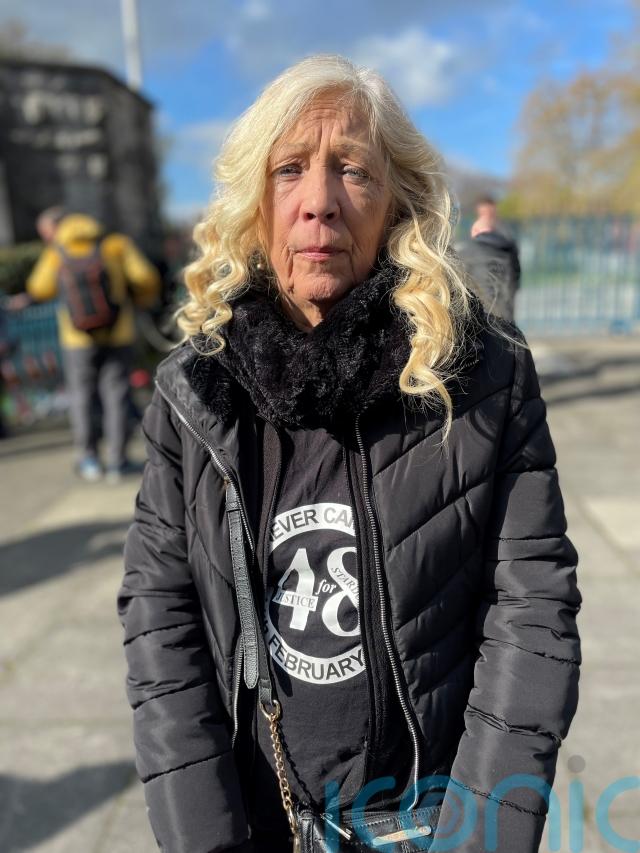
The fire in Artane in north Dublin broke out in the early hours of Valentine’s Day in 1981.
The new inquest, which is the longest ever held in Ireland, is coming to an end following months of evidence.
Dr Cullinane told the jury that they have heard evidence from witnesses across 95 days, and that they have shown “great commitment” throughout the stressful and vast proceedings.
Dr Cullinane also said that it is their responsibility to consider all the evidence and return a verdict.
She said she would instruct the jury on the law that applies to their deliberations.
Dr Cullinane also said that the jurors were the arbiters of the facts, and that she would go through the verdicts that are available for them to return.
The jurors were also told by the coroner that she would go through a list of questions or issues she prepared that will help structure their findings.
She said they should approach their task in an objective manner and that they will have heard discrepancies and conflicting evidence from different witnesses, but it is up to them to “accept or reject” it.
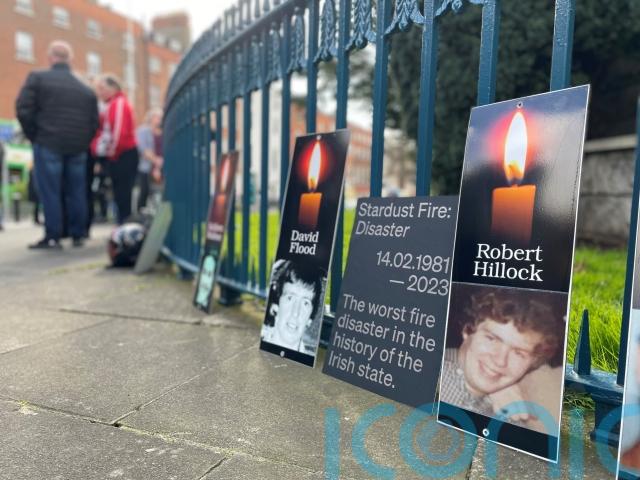
She also told the inquest that they heard evidence from 373 people, including three forensic pathologists and three fire experts.
On Friday morning, Dr Cullinane went through the evidence related to planning and design, which included statements from people relating to events in the years and months leading up to the fire.
Dr Cullinane is summarising the evidence from a number of architects, engineers, building surveyors and electrical inspectors as well as evidence from a salesman from a floor covering company which supplied carpet tiles that were used on the walls of the premises.
She is also providing a summary from Mr Butterly, who sat in the witness box for eight days last year.
The jury was also reminded how an insurer visited the Stardust venue months before the fire and refused to provide an insurance quote for fire cover, and how the use of carpet tiles on the walls was the “most significant contributor” to the spread of the fire.

The jury also heard again how there were a number of incidents leading up to the fire, including possible electrical issues, sightings of smoke in the premises by staff as well as complaints in relation to blocked doors and exit pathways.
The inquest heard that a week before the fire, priest Fr Dermod McCarthy, a member of All Priest Show, performed at the Stardust.
He tried to leave half-way through the show through an exit door, but there were chains across the door, which was locked. He gave evidence that he spent five minutes trying to open the door, but was unable to and left through the main entrance.
Another performer, who played in a tribute band, gave evidence that he saw yellow sparks coming from the back of the hall a week before the fire.
Jurors were also reminded that staff working at the Stardust said they received no fire safety training and were not aware of a fire evacuation plan.
Dr Cullinane was told of how some door-staff said that a policy came into place before the fire which involved keeping exit doors locked when members of the public were on site to prevent people getting in for free, despite this contravening by-laws.
An original inquest in 1982 lasted just five days and recorded the cause of deaths in accordance with medical evidence, with no reference to the circumstances or the cause of the fire.
After a long campaign by the victims’ families, in 2019 then-attorney general Seamus Woulfe directed that new inquests should take place.

Subscribe or register today to discover more from DonegalLive.ie
Buy the e-paper of the Donegal Democrat, Donegal People's Press, Donegal Post and Inish Times here for instant access to Donegal's premier news titles.
Keep up with the latest news from Donegal with our daily newsletter featuring the most important stories of the day delivered to your inbox every evening at 5pm.

This publication supports the work of the Press Council of Ireland and Office of the Press Ombudsman, and our staff operate within the Code of Practice of the Press Council. You can obtain a copy of the Code, or contact the Council, at www.presscouncil.ie, Lo-call 1800 208 080 or email: info@presscouncil.ie.