Why is there no RTE Late Late Show tonight?
Search


06 Mar 2026

Please allow ads as they help fund our trusted local news content.
Kindly add us to your ad blocker whitelist.
If you want further access to Ireland's best local journalism, consider contributing and/or subscribing to our free daily Newsletter .
Support our mission and join our community now.
To continue reading this article, you can subscribe for as little as €0.50 per week which will also give you access to all of our premium content and archived articles!
Alternatively, you can pay €0.50 per article, capped at €1 per day.
Thank you for supporting Ireland's best local journalism!


Sex abuser Bill Kenneally said he “probably” would have confessed to abusing teenage boys if gardai had acted on information they received two years before he had initially spoken to officers about his crimes.
Kenneally said that by 1985, he knew his abuse of teenagers was wrong and that he needed to stop.
The former Waterford basketball coach made the admissions while giving evidence at the Commission of Investigation examining the response of gardai and others to allegations of sexual abuse made against him.
The commission, chaired by retired judge Michael White, is also examining Basketball Ireland, as well as politicians and members of the Catholic Church.
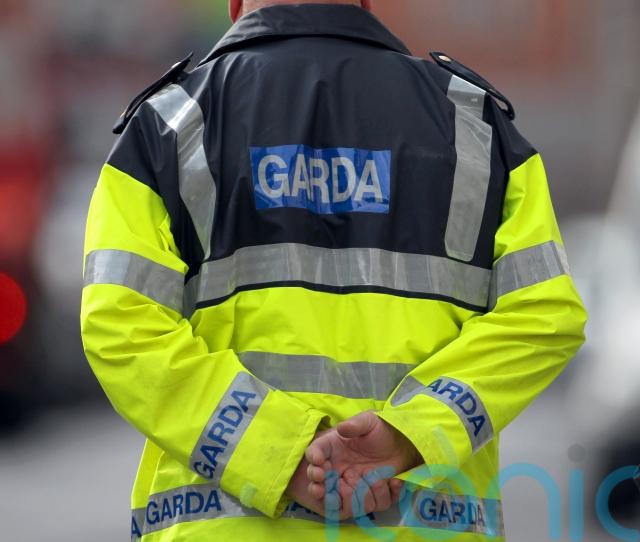
During proceedings on Tuesday, Kenneally said he told gardai in a 1987 meeting about his abuse of teenage boys, but “heard nothing” from gardai again on the matter until 25 years later.
However, it emerged on Wednesday that one of his victims had told gardai that he was abused by Kenneally as early as 1985, but claimed they did not act on the information.
Kenneally, aged in his early 70s and formerly of Summerville Avenue, Waterford city, is serving a prison term after pleading guilty to 10 sample counts of indecently assaulting 10 boys at various locations in Waterford in the 1980s.
Giving evidence on Wednesday, Kenneally also refused to accept that he ruined the lives of his victims, saying that he did not know why they took so long to come forward.
Ray Motherway BL, representing two victims, told the commission that there was an incident in 1985 involving one of Kenneally’s victims.
Kenneally was shown pictures of the survivors, referred to as A12 and A8, and confirmed he was aware of both them.
Mr Motherway said his client, A8, stated that Kenneally picked him up in his vehicle and he was abused by him.
He said he was left angry by what happened and went to the garda station the following morning.
Kenneally told the commission he was familiar with the victim’s evidence.
Mr Motherway said the victim gave Kenneally’s name to gardai, saying he had been “sexually abused by Bill Kenneally”.
However, the victim claims he was told by gardai that there was nothing they could do for him without an adult present.
The commission was told that this conversation happened in 1985, two years before Kenneally was spoken to by gardai about his abuse of teenage boys.
“This occurred in June 1985 and by 1987, you went for interview with An Garda Siochana,” Mr Motherway added.
Kenneally was asked whether, by that stage, would he have held his hands up and whether his position had changed in respect of his viewing of offending.
Kenneally said he felt that he needed help and that he needed to stop.
He agreed that on the day he spoke to gardai on December 30, 1987, his admission to the abuse “had been coming for some time”.
He agreed that he realised he wanted to be stopped and that by 1985, he realised the errors of his ways.
“Did you know what you were doing was wrong?” Mr Motherway asked.
“I probably did,” Kenneally replied.
He was asked that if gardai had acted on that information and knocked on his door, would he have “had it in his heart to tell them?”
“I probably would have,” he told the commission.
Kenneally said he “probably” would have confessed to his crimes in 1985.
Asked what gardai would have found if they had searched his home at the time, Kenneally said they would have found orange twine, handcuffs, scissors as well as a flash lamp.
He also told the commission he kept photographs of boys in a shoe box in a bedroom.
It emerged on Tuesday that during the gardai questioning in December 1987, Kenneally was asked if “there was any sodomy involved and I said there wasn’t”.
On Wednesday, Kenneally was asked what was the reaction from the two gardai when they were told there was no sodomy involved.
“It was more relief,” he replied.
Kenneally was then asked if he thought the two gardai, Superintendent Sean Cashman and Inspector PJ Hayes, shared his view of the severity of his offending “because they viewed it through certain lenses you say existed in 1980s Ireland”.
He replied that he believed “society in general” had that view.
Mr Motherway asked if the gardai had “shrugged their shoulders” at that stage, to which Kenneally said that “society did in general”.
Barrister Barra McGrory, representing several victims, asked Kenneally about how he regularly gave boys of 13 and 14 “significant amounts” of alcohol.
Kenneally accepted that he regularly supplied alcohol from his car and his house to young teens.
Mr McGrory asked if he provided alcohol and money to potential victims with the purpose of “ingratiating” himself to them to fulfil his sexual desires.
Mr McGrory put it to him that the purpose of buying alcohol for 13-year-old and 14-year-old boys was to “loosen their inhibitions so they would be more co-operative of what you intended to do”.
His response, “co-operative insinuates consensual”, drew gasps from his victims, who were listening to his evidence in the same room in Dublin.
It was also put to Kenneally whether he accepted that he ruined their lives.
He told the commission that “if I did, I don’t know why it took them 30 years to come forward”.
Kenneally was also questioned as to what his cousin, former Fianna Fail TD Brendan Kenneally, knew about his sex abuse.
The commission was told that Kenneally and Brendan Kenneally went on a basketball tournament in Cork in 1981 with a number young players.
Brendan Kenneally was in charge of allocating the hotel rooms, and it was put to Bill Kenneally that Brendan put him in a room with one of his victims.
Mr Motherway said that his client, referred to as A12, shared a room with Kenneally and “suffered horrific abuse” and that the following morning, Brendan Kenneally had asked A12 if he “had fun last night”.
Mr Kenneally also told the commission that the sexual assault of children and teenagers without sodomy was “totally disregarded” in the early 1980s, but was “seen more as a crime” in the late 1980s.

Subscribe or register today to discover more from DonegalLive.ie
Buy the e-paper of the Donegal Democrat, Donegal People's Press, Donegal Post and Inish Times here for instant access to Donegal's premier news titles.
Keep up with the latest news from Donegal with our daily newsletter featuring the most important stories of the day delivered to your inbox every evening at 5pm.

This publication supports the work of the Press Council of Ireland and Office of the Press Ombudsman, and our staff operate within the Code of Practice of the Press Council. You can obtain a copy of the Code, or contact the Council, at www.presscouncil.ie, Lo-call 1800 208 080 or email: info@presscouncil.ie.