Search


23 Mar 2026
Search
23 Mar 2026

Please allow ads as they help fund our trusted local news content.
Kindly add us to your ad blocker whitelist.
If you want further access to Ireland's best local journalism, consider contributing and/or subscribing to our free daily Newsletter .
Support our mission and join our community now.
To continue reading this article, you can subscribe for as little as €0.50 per week which will also give you access to all of our premium content and archived articles!
Alternatively, you can pay €0.50 per article, capped at €1 per day.
Thank you for supporting Ireland's best local journalism!


When Mark Dearey opens with the statement that his grandmother died on Clanbrassil Street (many years ago), you know his attachment to the town is embedded deeply.
Guiney’s Home Store may now inhabit what was once Dearey’s shop on the same street, but the ties bind eternally.
These days Mark runs The Spirit Store pub and live venue on George’s Quay. But the town centre is in his blood.
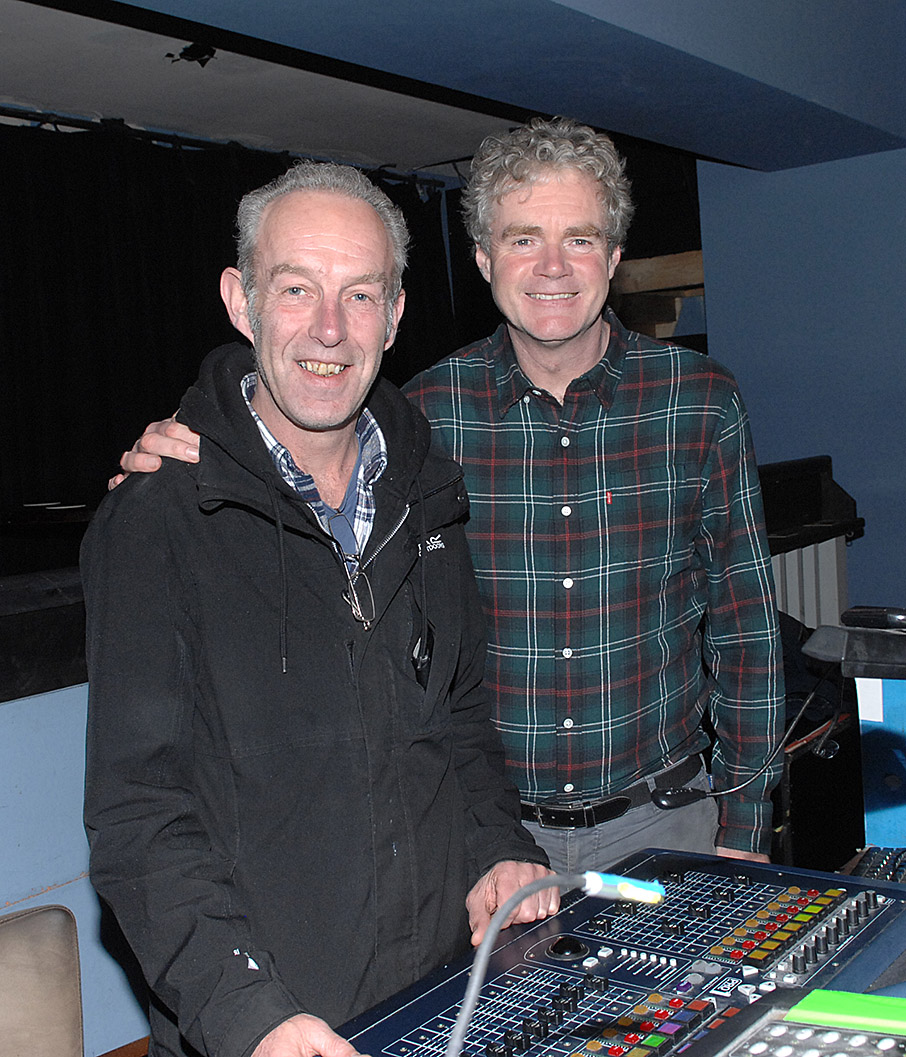
He has been an active member of BIDS (Business Improvement District Scheme) for some time now, but only recently took up the role of chairperson after Tom Muckian, owner of Roe River Book on Park Street, stepped down.
Looking beyond our own shores to see how town centres elsewhere are coping - and have coped - with the stark realities of modern retail trade is vital, he feels. Fostering important collaborations in this regard plays into any future planning.
To this end, there will be a session on Monday, December 2 in the County Museum organised by the Heritage Council and the Dundalk Collaborative Town Centre Health Check Project Partners, which will see Phil Prentice, Chief Officer with Scotland's Towns Partnership, come to Dundalk and speak about the high street retail landscape in Scotland - and the painful lessons learned.
“Whatever about the demise of the Irish town centre," explains Dearey, as we sit down for a cup of tea on a grey afternoon last week, "we’re years behind the decline that happened in Britain and Scotland, were neo-liberal planning agenda completely wiped those places out. They’re in really bad order.”
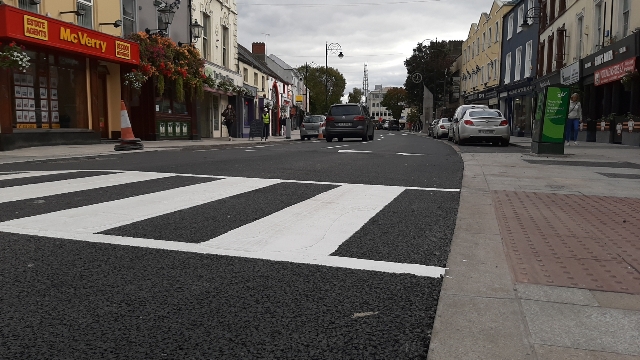
The UK had to move quickly to stem the rising tide and try to save their town centres.
“Scotland got its town partnership further down the road in terms of thinking and we’re getting the benefit of their experience and analysis when they come over here,” he says.
Dearey stepped away from local politics earlier this year, before the last local elections (he’s a member of the Green Party), he says he has a unique perspective given this background:
“I’ve seen the issues from both sides of the fence and a BIDS company is a company that is established through an action of the council and its income is derived from the rates, so I felt I was able to provide that perspective from local government and being in business at the same time.”
Looking at things from different angles seems to be part of Mark’s DNA. While many have previously mooted the overwhelming need for a large, national or internationally renowned anchor tenant, or tenants, to come into the town centre to reinvigorate it, Mark looks at that as a negative.
The way he sees it, our town centre’s very independence is its key strength.
He turns his thoughts back to the UK for a moment, were many towns have been hollowed-out because they built their urban retail strategy around having just such a major anchor tenant(s), but then when the same tenant(s) pulled out, they were left high and dry. It’s not the case with Dundalk.
He says: “The opportunities for the town centre are almost limitless and at the same time the risks are very grave,” Mark adds soberly.
“It’s a really dynamic environment we’re working in at the moment. There are landmines all over the place, businesses are doing their very best to walk the line between them and to continue to be able to pay their staff and take something out of the business.”
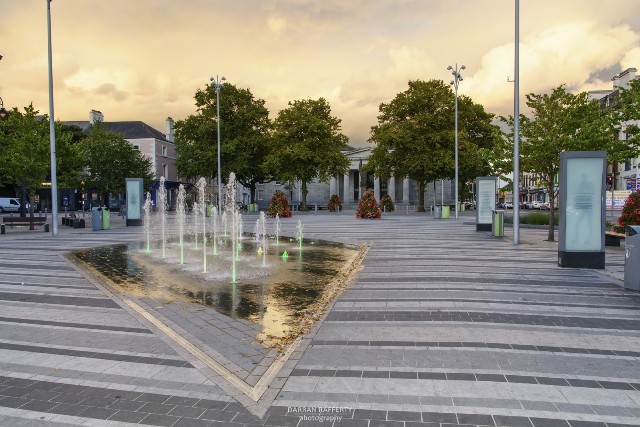
It’s clear he has an affinity with anybody working in ‘bricks and mortar’ retail these days.
“I genuinely believe that independent retailers are heroes,” he agrees, “and I’ve huge admiration for them. I’m from them. I’m from a family where it was our way of life and my two brothers own shops. And I run a business in a different sector.”
Looking to the future can be a dangerous game in the retail trade. Getting by week-to-week is almost as far as most retailers can afford to look, but what does Mark see when he looks into the tea leaves?
“I’m really hopeful that the BIDS company will continue to strengthen what the town centre has to offer and we are engaging with the council and urging them to take a radical stand on the town centre,” he continues:
“And while the threats of the online migration are huge, the opportunities to create new experiences in the middle of our town are great too.”
These “experiences” refer to the hosting of festivals and the need to make a town centre an experiential entity - the sights, the sounds, the emotional connections. It’s something online shopping can never replicate. Mark points to a recent local success in this regard.
He adds: “One of the great things about the Seek Arts Festival is that it allows us to tell some of our stories and there are so many more stories to be unearthed and made real.”
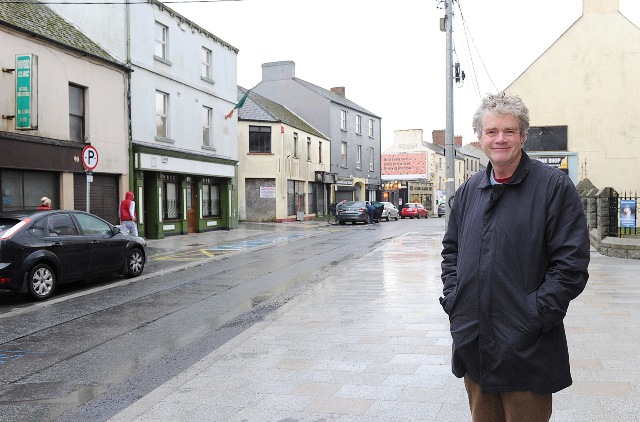
His excitement at the potential in this regard bursts out of him as he speaks:
“The new plaza (currently under construction as part of the Clanbrassil Street and St Nicholas Quarter Rejuvenation Scheme) down at the Green Church, which I think is really exciting, gives us a chance to talk about some of the Reformation history that happened in Dundalk, and some of the amazing stories around Oliver Plunkett and his incarceration there.
“We have that story to tell, we have the Robbie Burns story to tell. The war story to tell and I’m hopeful the war memorial project is still moving.
“There’s so many stories to tell and then wrap a ‘retail offer’ around them, (plus) the new wide streets with traffic moving at a pace that makes it safe for everybody and it isn’t far to get from one pavement to another.”
The thorny old issue of making the town centre more accessible for cars is something Dearey is not turning a blind eye to.
“We need to create a sense that the walk from the car parks behind our streets are no longer (a distance) than the walks from car parks to shops in the Marshes. You’re shopping is close to you.
“But we can’t just say that, we have to demonstrate it by upgrading our linkages and making the town centre more legible and transparent.
“Maybe doing a coach park project and getting people moving and getting visitors moving through the town again.”
The growing clamour towards environmental sustainability in many aspects, can aid traditional retail, Mark feels.
“I have a distinct sense that with all that is going on and with the climate challenge, that retail will become something that people demand be sustainable, that gives them chances to live and make retail choices that are more locally-based. That support local jobs, that don’t require huge amounts of plastic and mass-manufacturing and vast amounts of waste and car journeys,” he adds,
“I think we can do a lot in that space to make the town centre something that people who think like that want to be in.”
From a greater urban planning perspective, Dearey sees an opportunity for Dundalk to correct traffic flows and the movement of people into the town centre for future generations.
“(There is) one thing I would like to see, and I’ll be raising this; the west of the town is expanding, a lot of new housing, (but) it’s the wrong side of the railway track.”
Dearey explains further: “So you’ve only two ways of getting over or under the railway line. You either go over it at the bridge at Clarke train station or under it at Castletown Road, I think we need a midpoint way of getting over or under the railway line - and not by car,” he adds.
It’s ambitious, but as he warms to his theme, he expands on the deeper socio-economic reasons for such a new link explaining:
“I think if we can link all that new population and community with the town centre, but at a mid-point between the Castletown Road and the Carrick Road, we can bring people into the town in a new way and their expectations will be completely different.
“It allows us to link Cox's Demesne with the town centre too, which I think is really important - that the larger housing estates feel better included and the opportunities that that could create will be very important for those communities, I really do.
“The services they can access, it would be invaluable to support them in their lives, as well as the retail offer being available to everybody.”
Mark applauds the work being done across the different interested groups locally to date. These collaborations are incredibly important.
Alison Harvey, the planning officer with the Heritage Council, has been a vital cog in the machine: “She understands the European context and the funding mechanisms available”, he adds: “She knows things that none of us know about how to make urban regeneration real and fundable and how to present the case to draw it (funding) down and action it, she understands that.
“She’s very committed to Dundalk and we’ve struck-up a particularly good relationship with her, part of that is that the BIDS company is very well embedded here and it made it easier for her to meet the town, because the individuals were already in the works and it has fast-tracked Dundalk.”
There have been others that have become part of the process, including DkIT and the council are also showing a willingness to contribute more and more.
While it all seems so positive, Dearey feels that those who know what to do locally are being forced to fight with one hand tied behind their backs. The centralisation of decision-making, away from local and regional authorities, is stymying progress, he believes.
“I don’t blame the current lot (government), but historically there’s been a real reticence in Irish governments to allow regional politics and regional decision making (to) happen,” Dearey says.
Mark goes on to explain the make-up of the regional assemblies which are ‘vitally important but often overlooked’.
Overhaul
A major overhaul of how our local authorities function is needed.
“I think county councils are an anachronism from a bygone era and what we really need are town and district councils, like in the north. So that your planning starts with your urban centre and works with its hinterland to serve everywhere. What happened with the new local authority structures - and I knew it would happen - is that rural issues, purely in time terms, take up a lot of our time - and the urban area is where the bulk of the people are,” he adds.
BIDs has been a qualified success in Dundalk, so much so that Drogheda has just launched its own version. However they asked for, and were granted, a bigger bite of the local authority rates cake (3.5 percent, versus Dundalk BIDS’ cut of 1.5 percent). This is something Dearey feels Dundalk needs to take on board for future planning.
“While we have years and years of experience, it’s not healthy to have that gap between two sister towns at both ends of the county.
“We need to respond and be more ambitious in what our BIDS company can do. We need to begin to plan for that. And make it part of our budget for next year,” he adds, “You have to make a business case for it. It has to be strong and persuasive.”
From speaking to Mark, neither will be lacking.

Subscribe or register today to discover more from DonegalLive.ie
Buy the e-paper of the Donegal Democrat, Donegal People's Press, Donegal Post and Inish Times here for instant access to Donegal's premier news titles.
Keep up with the latest news from Donegal with our daily newsletter featuring the most important stories of the day delivered to your inbox every evening at 5pm.

This publication supports the work of the Press Council of Ireland and Office of the Press Ombudsman, and our staff operate within the Code of Practice of the Press Council. You can obtain a copy of the Code, or contact the Council, at www.presscouncil.ie, Lo-call 1800 208 080 or email: info@presscouncil.ie.