

‘Shedload’ of Troubles inquiries likely without Legacy body funding, MPs warned
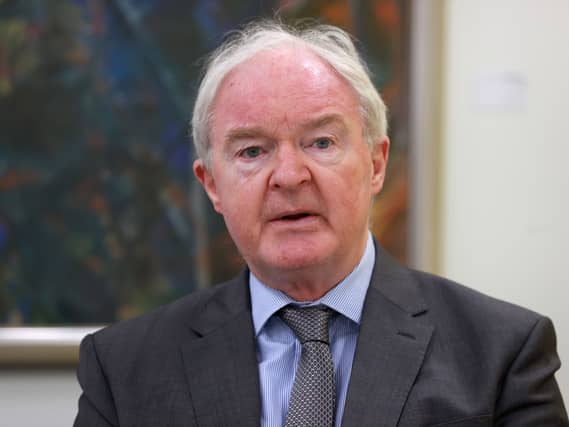

Independent Commission for Reconciliation and Information Recovery chairman Sir Declan Morgan addressed the Northern Ireland Affairs Committee.
MPs have been warned of the potential for a “shedload” of Troubles-related public inquiries if an investigative body is not given adequate resources to conduct its work.
Sir Declan Morgan, chairman of the Independent Commission for Reconciliation and Information Recovery (ICRIR), was speaking to a Westminster committee where it was heard the body is operating with less than half the staff required.
All UK police investigations into Troubles-related killings were shut down in May 2024 under the previous Conservative government’s Legacy Act and the ICRIR was established.
That Act was roundly condemned by political parties in Northern Ireland as well as victims and survivors groups.
The Labour Government pledged to “repeal and place” the Legacy Act, bringing forward the Northern Ireland Troubles Bill which is currently being considered in the House of Lords.
Labour’s Bill, agreed as part of a joint framework with the Irish Government, will put in place a reformed Legacy Commission with enhanced powers.
Last month, the Government added more than 100 amendments to the Bill that included giving the UK’s Attorney General the final say in deciding whether serious Troubles-related prosecutions should go ahead, and provided further protections for veterans.
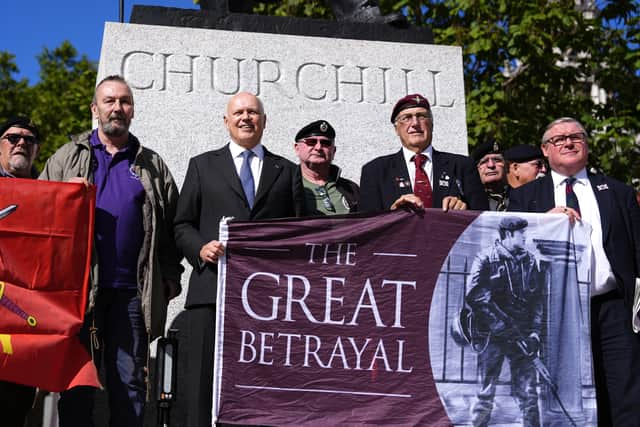
Sir Declan gave evidence to the Northern Ireland Affairs Committee on Wednesday and outlined the body’s current workload.
“We have at the moment 159 investigations, which are through eligibility and which we’re working on,” he said.
“We have another 57 cases in case support which are waiting to come through, so we’re looking at a workload of over 200 investigations.
“We’re dealing with 293 deaths and 310 who’ve come to us. We have less than 200 investigators.
“Cases include cases like Guildford, which shows probably six, seven, eight different events, other than the bomb that went off in Guildford that have to be investigated as part of dealing with that; the M62 bomb; the 18 people who were killed in Warrenpoint.
“Trying to deal with those cases with these sorts of resources is simply not possible, and we need to impress upon those who are making these decisions – the question you ask is what happens in the event that we end up in a position where we can’t deal with these cases, there is going to be a shedload of people looking for public inquiries and they will cost a fortune because public inquiries do that.
“That we will have countless victims and survivors, among them veterans, veterans’ families, who will find that they’re not being given the truth about what happened.
“I just can see the adverse impact of us not being able to have a workable basis for dealing with all of these cases, including these cases that are very resource-heavy like those that I’ve mentioned, it just doesn’t bear thinking about.”
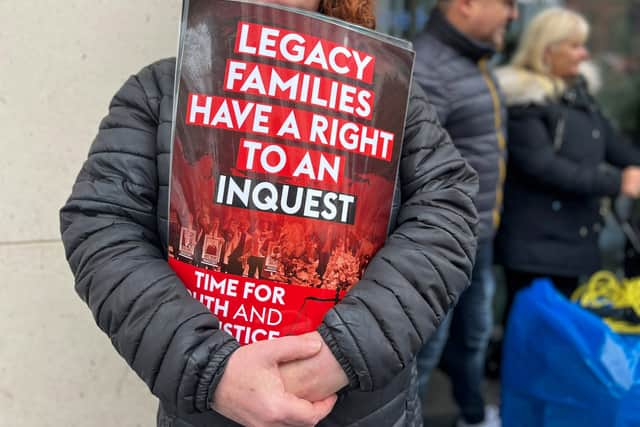
Earlier in the session, committee chairwoman and Labour MP Tonia Antoniazzi outlined an amendment she had filed to the Troubles Bill that would remove “from organisations such as the PSNI the costly administrative burden of categorising the sensitivity of evidence that it passes to the commission”.
ICRIR assistant commissioner Amanda Logan said this move would put “the onus on the commission” and is “an additional burden that we don’t currently have”.
She added: “We did a piece of work towards the end of last year in terms of identifying the investigative model that would suffice for the commission to deliver on its responsibilities, and that went through a rigorous scrutiny panel, an independent panel that was brought forward by the NIO (Northern Ireland Office) in January of this year and that panel concluded that the commission needed around nine syndicates.
“We talk about syndicates; there are 58 investigators and support staff in a syndicate.
“However, they also concluded that if we were able to utilise artificial intelligence, that we could reduce that to seven, so that’s about just over 400 investigative and investigative support staff.
“When we talk about support staff, we’re talking about intelligence officers, analysts, the MIR that are taking in that information, and our case support, the front door, if you like.
“At the minute, we have 189 operational staff in those roles, so we have less than half of what the commission needs in order to fulfil those functions.
“So absolutely, we need the resources to be able to do it.”