

Inside Track: World Cup was great, but not damaging to the GAA

Inside Track with Joe Carroll
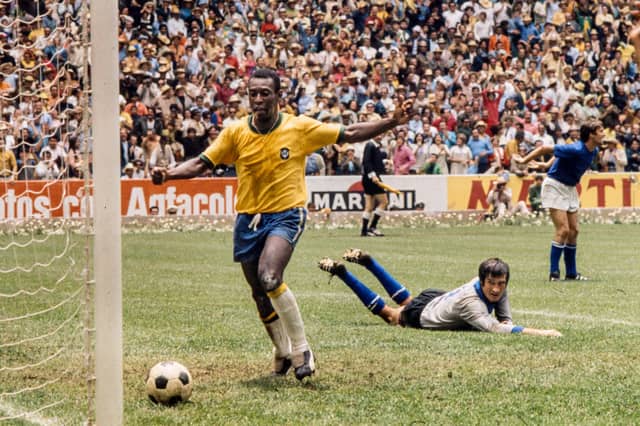
The 1970 World Cup belonged to Brazil. Not only did they win the trophy, but along the way, their silken skills had many millions around the world captivated.
Pelé, one of the game’s greatest, was hacked out of it at the 1966 renewal, won on home soil by England. That year Brazil were going for three in-a-row, but with their talisman a target for some vicious tackling, they failed to reach the quarter-final.
Edison Arantes Do Nascimento – the name Pelé was given soon after his birth – was allowed every opportunity to express himself in Argentina four years later, and along with the likes of Alberto, Rivelino, Tostao and Jairzinho, gave his side a clear passage to the final.
These are only names to the younger generation of soccer followers, but believe me, or anyone else who was around to see them in action, they were great. Look up the final on YouTube and see for yourself the magic they weaved.
The 1970 final was another cakewalk, Brazil beating Italy by 4-1, the second time the South American side won a final by three clear goals. Twelve years earlier, they beat the host country, Sweden, 5-2. Pelé scored in both matches.
Not only was it followers of the game who were enthralled by all that had unfolded in stadiums throughout Argentina – so too were others of different sporting persuasions. Like a Democrat colleague of mine.
He wasn’t an Oriel Park regular, but watched practically all the World Cup matches on telly – Pelé’s Brazil and co had him in raptures.
He might just have lost the run of himself – he did – when, knowing what my first preference was, said to me that this was “the end of the GAA”.
The end of the GAA? An organisation that had stood had the test of time, 84 years since it made its way onto the sporting calendar? Wild and swirling words for sure.
It’s true that championship match attendances were down while the World Cup was in progress, but when it came to the All-Ireland final in September, long after Brazil had taken the Jules Rimet around the schools, there was the usual scramble for tickets. Kerry beat Meath in front of a crowd of 71,775.
Several World Cups have been contested since, and the fare has been good. There’s one in progress at the moment, as we all know. At the same time, the football and hurling championships are coming to the business end.
Whatever about 1970 crowds being down, spectator interest has today never been as high. What’s happening in North America is being enjoyed, but is not a distraction.
Hurling matches down south are packing them in – and there was a near-40,000 crowd at the Leinster final. Football is being watched by at times capacity attendances, and because of the new rules, the big ball game is more attractive than it was, say, three or four years ago – and for some before that.
The football championship has people talking about it more than ever, and, again, that is probably because of the change there’s been to the format, making games far more attractive. The game was dying on its feet before Jim Gavin and his colleagues came together for the first time.
Or maybe it’s because the team followed by readers of the Democrat – and the writer of this article – are among the eight contestants still in the running for All-Ireland honours. A mixture of both, perhaps.
This is Louth’s second time to contest a quarter-final in recent times. The first was against Donegal three years ago – it didn’t have a happy outcome for the then-Mickey Harte team.
Confidence going into this one is much higher than it was back then. There couldn’t be a better time for a Louth team to reach the semi-finals for the first time since 1957.
One thing is for sure, Sam Mulroy won’t lead his team on to the field to the sound of silence, nor will there be a lack of noise whenever there’s a score or turnover.
And while the final rounds are being played out, there’ll still be time to see what’s happening on the other side of the big pond.