

There are many more ponytails than Haaland’s on show

Inside Track | Joe Carroll
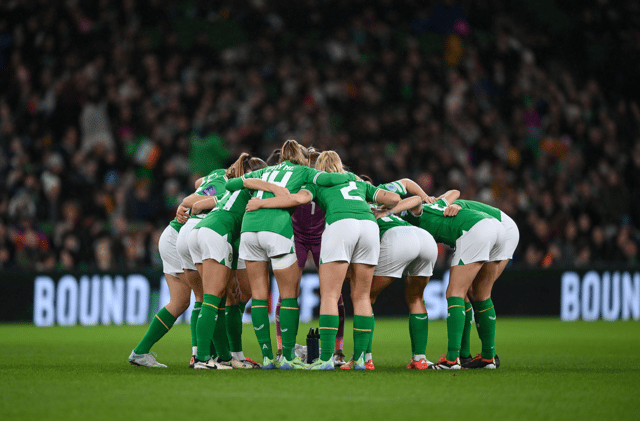
Ladies’ football, soccer and rugby as well as Gaelic, is enjoying greater recognition in this country than ever before. For a number of years now, Croke Park finals have been attracting huge crowds; and last week, the Republic of Ireland team had 25,000 looking on at The Aviva for their Euro qualifier with Wales.
It didn’t go to plan for Eileen Gleeson’s side. A 2-1 defeat means her side won’t be heading to the finals. Eileen may or may not suffer the same fate as her predecessor, Vera Pauw; but the odds about her staying in charge are against her. After all, Vera got her team to the World Cup finals, but still got the chop.
Ladies’ GAA is due to become part of the inner sanctum, with the LGFA to have a permanent place around the Croke Park table. Its members will be taking their place alongside their sisters from the camogie association.
Mentioned above is the size of The Aviva crowd for last week’s match. Would you believe that over a century ago more than twice that many attended a game? It was in England, 53,000 turning up at Goodison Park.
Seemingly, during World War One, a team with the hard-to-fathom name of Dick, Kerr Ladies’ Team were to the fore. They played St Helen’s in a game at the home of Everton on St Stephen’s Day, 1920, and the place was crammed.
ONLY 25,000 were there to see Dick, Kerrs, representing England, play France in an unofficial international that same year, but in 1921, Dick, Kerrs played a total of 67 games against a variety of opponents, and were watched by a total of 900,000.
That was enough to put the wind up those governing the men’s game. They were concerned that the ladies’ game would eclipse theirs, which had only returned in 1919 after a break due to the war.
So much so, that Newcastle United refused a local team use of St James’ Park, even though the same team had played in front of a crowd of 35,000 two years earlier, raising much-needed funds for war charities.
How are we going to go about winning this battle, the Lancaster Gate bods asked. Let’s try to discredit our rivals, highlighting spurious medical ‘evidence’. Lady players, the people with the stethoscopes said, would not be able to have children. Also, they wouldn’t be available for ‘violent leg strain’. Better they play lacrosse or hockey.
If that wasn’t enough, the FA banned women from playing on men’s pitches. And how did the girls respond? They formed their own association, the English Ladies FA almost immediately (on this day 123 years ago). It would, however, take the game decades to recover from the early onslaught. Now the game is thriving.
(On Sunday last your writer went into the bookies and on one of the bank of screens saw that Manchester United were leading Liverpool 2-0. For a second it seemed that Amorin’s side had at last got a decent result, but then the ponytails – much different from Haaland’s – showed up. A reminder of Goodison over a century ago? Maybe not. Ponytails were probably not in vogue then.)