

Jim McLaughlin will always have a place in Dundalk hearts
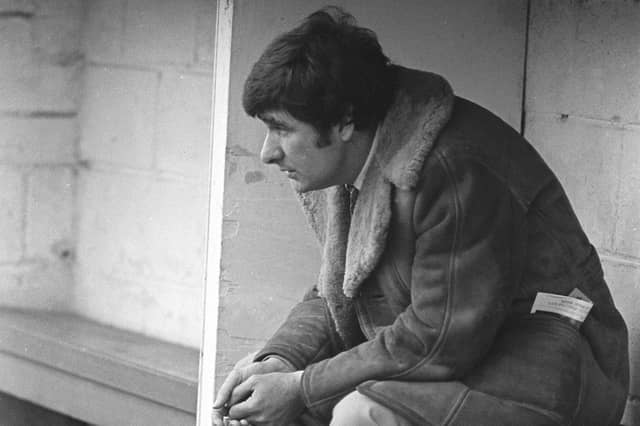

Inside Track | Joe Carroll
You didn’t have to be an Oriel Park regular to be absorbed in what became known as the McLaughlin Era. Indeed, you didn’t even have to be an attendee.
I was one of the latter. But it hadn’t always been like that. Living no further than a Ted McNeill kick-out from the pitch, ‘Casey’s Field’ was a regular place for sporting entertainment over the winter months and well into spring.
We watched the League of Ireland team one Sunday and what was known as the B team the next. I played there at under-age, for Frankie Whitmarsh’s Arsenal and after that, Lisnawilly, a team based in and around McDermott’s Terrace which we ran ourselves.
And around the same time, the 1950s into the ‘60s, I sold programmes for Dundalk’s games. My pitch was on the Carrick Road and my clients were mostly those coming in from the Monaghan area. Soon after kick-off, I would report to Jim Berry with my money and returns.
Having done so one day, instead of going in to watch the game, I hopped on my bike and headed for the Athletic Grounds where Louth were playing Galway in the National League. The Terrible Twins, Frankie Stockwell, and Sean Purcell were on the visiting side, and they were winners.
I could have been declaring my hand that day, demonstrating the direction where I wanted my career to go, and maybe where my true loyalty lay. It was Dundalk Gaels full-on after that, with Louth taking the place of Dundalk.
But I still wanted the Lilywhites to win. Their fortunes were followed. This paper’s reports were seen even before they went into print; The Irish Press was the daily read.
The Fox Era, bringing something new to Oriel, was a truly exciting time. When it was over, few among those I knew to be avid supporters agreed with this paper’s soccer writer’s assertion that it had been a ‘wreckage’. Flamboyant, I’d say, from what I was hearing.
Years later came Jim McLaughlin’s stewardship. It, too, had ‘Era’ appended. There were others to follow, undoubtedly the one belonging to Stephen Kenny best remembered, not only because it was the most recent, but also historic for the number of trophies it delivered in a short space of time.
Accepting that comparisons are odious, let’s just say both spells were honour-laden and glorious, deserving of a prominent place in the history of Dundalk FC.
I didn’t have to be going to games to know how good it was for Dundalk in the 1970s. The talk was every day in the ‘Demo’ printing works where I was toiling. Most of the others were Oriel-goers, and as the team took flight soon after Derryman McLaughlin’s arrival, getting a word in, maybe after Louth had had a good win, was difficult. It was all black-and-white.
The talk was about Oriel, how a succession of wins strung together by a team McLaughlin had built with not a great deal of money behind him were getting results – big ones, at that. Jim Murphy’s History tells us that Séamus ‘Shakes’ McDowell was bought for £150 from Sligo.
That was a steal that wouldn’t be matched until Alex Ferguson paid a pittance to Dutch club, Bondy, for Peter Schmeichel.
League and Cup wins kept coming to Oriel, sometimes in the same season. And there were memorable nights and days in Europe as well, many of them in the continent’s premier competition, then known as the European Cup. (If only the ball coming Tommy’s way hadn’t been deflected, Celtic could have been humbled. Standing by for a quarter-final was the great Real Madrid.)
Jim McLaughlin, who died last week at the age of 83, was more than a one-club wonder. He brought success to the others he was involved with as a manager, principally Shamrock Rovers.
And before he took his place on the sidelines, he had a career with Shrewsbury Town and Swansea winning him 12 Northern Ireland caps. When he first took over at Oriel, he filled the role of player-manager.
I spoke to Jim McLaughlin a few times, first of all when I shook his hand in, above all places, Drogheda’s Gaelic Grounds. He was there to see a Leinster senior club match involving Sean O’Mahony’s, a club with which the boys in his family had a strong association.
Meetings in more recent times were in much different – and, yes, more difficult – surroundings for both of us. But even then, he was never lost for a smile or a humorous remark. May this great sportsman rest well.