

Inside Track: Real Madrid and Eintracht went one better than PSG and Bayern

Inside Track with Joe Carroll
Attackers had a field day in the recent Champions League first leg semi-final, with PSG facing Bayern Munich. Not so much those holding fort at the back.
It was a nine-goal thriller, PSG winning by one.
The French side did enough second time out to qualify for the final, and in a few weeks, attempt to stop Arsenal from winning one of the game’s biggest trophies – in size, as well as stature – for the first time.
There have been many lob-sided scorelines in Europe’s premier competition over the years.
Most were in games in the initial stages back when it was a straight knock-out, champions from each country going into the first round draw regardless of their status.
A number of lambs were led to the slaughter, and this was reflected in the score.
Neither Real Madrid nor Eintracht Frankfurt were among the outsider brigade when they faced each other 66 years ago, almost to the day.
How could they be? They had made it to the final of continent’s premier competition, then known as the European Cup.
Eintracht were playing at this stage for the first time, but though the competition was still in its infancy, Real were well acquainted with the big trophy. This was the fifth final, and they’d won all of the previous four.
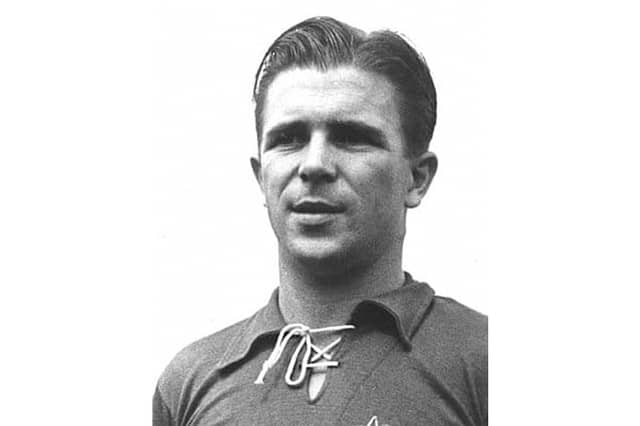
The Spaniards had by now the great Hungarian, Ferenc Puskás, in their ranks (He had left his native country at the time of the 1956 Uprising), and he had alongside him Alfredo di Stéfano, who, you could say, was a journeyman International, having played with his native Argentina, Colombia and Spain.
The prospects of a thriller engaged followers from far and wide.
Just as well, then, that Scotland’s Hampden Park had been chosen as the venue. Upwards on 135,000 turned up and all could be accommodated.
Eintracht were on a quick return visit to Glasgow. In the semi-final, they had beaten Rangers 6-1, having won the first leg 6-3. Talk about lobsided scorelines.
The German side were first to open the scoring, but that was about as good as it got for them. Within 30 minutes, Real were in front, di Stéfano scoring twice.
It was then the turn of Puskás. He did better than his colleague, coming up with three in-a-row, which at the time constituted a hat-trick, not like now when three at any time will get the scorer the ball to take home.
The little Hungarian didn’t stop at that. He added a fourth before di Stefano scored his third to bring the Real total to seven. Erwin Stein got two in reply to make it 7-3.
Ten goals in all in a game regarded as one of the greatest ever, perhaps not for its competitiveness, but for the brilliance of the lethal Madrid strikeforce. Gento wasn’t too bad, either.
If it was today, there’s a possibility the FAI could be calling at di Stéfano’s door. Although born in Argentina, Puskas’s sidekick could have had more than a trickle of Irish blood in his veins.
His mother, Eulalia Laulhé Gilmont, though born in Argentina, was of French and Irish descent, her relatives tracing to Swinford, Co Mayo.
Just thinking, had di Stéfano been up front in a green jersey, England wouldn’t have snatched that late, heartbreaking draw in the 1958 World Cup qualifier at Dalymount.