

Inside Track: Does your mother come from Ireland?

Inside Track with Joe Carroll
That was the headline to a newspaper story which appeared at the beginning of the 1970s. It was at a time when Kevin Keegan’s precocity on the football field was beginning to attract attention, not least the FAI’s.
The Merrion Square politburo was interested in the young player’s lineage, he carrying a surname that was probably shared with many in this country. (A one-time Dundalk taxi driver carried the name.)
“Your mother, father, grandmother or grandfather, any relation at all, wouldn’t have come from Ireland by any chance,” they would have asked.
This was before the Jack Charlton era, when Ray Houghton, Mick McCarthy, Tony Cascarino and several others looked into their background to see if they were eligible to play for the Republic of Ireland, under the so-called ‘Granny Rule’.
They could, of course, and all played a significant part in this country becoming contenders in European football in the late 1980s, and then qualifying for three World Cup finals in 12 years.
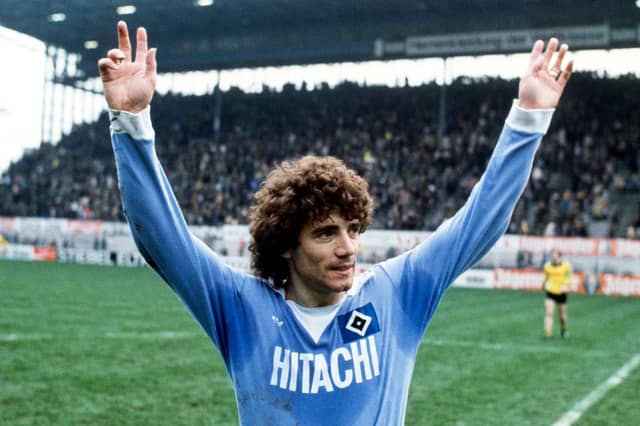
It’s not known if Keegan, who died last week at the age of 75, had a throwback to the Emerald Isle. If he had, he wasn’t enticed to wear the green jersey.
England was his team. He played for the Three Lions and managed them in a star-studded career that lasted over three decades.
Keegan, affectionately known as ‘King Kevin’ or ‘Mighty Mouse ’ around Anfield and on Tyneside, had a much more successful time of it as a footballer than manager.
He won multiple European and English league and cup titles with Liverpool, and was twice named winner of the Ballon d’Or. No other English League player has won this prestigious award more than once.
As a manager, he was responsible for attracting Alan Shearer to Newcastle United, a team he had guided to the Premier League. His outfit appeared to be set for the top title in the 1995/’96 season, several points clear of Manchester United.
But he famously – or infamously, more like it – got into a slanging match with Alex Ferguson. Not a good idea: Fergie could be beaten on the pitch, but was hard to topple off it.
They could tell you that down in Tipperary’s Coolmore, the horse breeding establishment which housed a thoroughbred, Rock of Gibraltar, that ran in the red-and-white Ferguson colours. A dispute arose when the horse was retired to stud.
There was a settlement eventually, the details of which weren’t made public. But you’d have to think it was to the United gaffer’s satisfaction.
Newcastle capitulated after the televised Keegan rant, finishing runner-up, four points back from United. Victory was one of seven for the Old Trafford club in the first nine years of the Premier League.
Keegan became England manager in 1999. It didn’t work out for him, lasting just 18 months. His last game, a Euro 2000 defeat by Germany, came at Wembley, and he cut a lonely figure as he walked from a pitch he had graced so elegantly as a footballer.
This and his verbal set-to with Ferguson are likely to feature in any television programme on the Scunthorpe-born Keegan. But it should only be a small segment. There’s a lot in the archives that surely should hold precedence.