

UK businessman who targeted and groomed two girls moves to appeal conviction
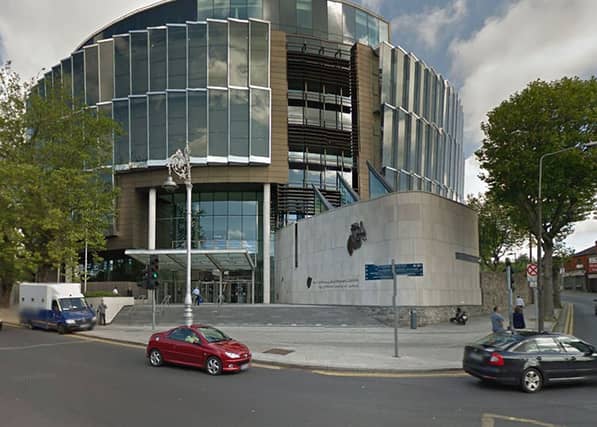

Court
A UK businessman who targeted two young girls when they were being neglected by their mother, must wait to hear the outcome of an appeal against his conviction.
The 38-year-old man, who cannot be named to protect the identity of his victims, was found guilty of three counts of rape and eight counts of sexually assaulting two girls at addresses in Dublin and Louth between December 3, 2010 and March 10, 2011 when they were aged 10 and 12 years old. He had denied the charges.
Sentencing him to 14 years imprisonment with the final two years suspended, Mr Justice Michael White said they were “grave offences” at the most serious level.
The Central Criminal Court heard that the girls were living with their mother and younger siblings in the UK when the man came into their lives in 2010. Shortly afterwards, the family moved into his house in an upmarket area nearby.
He showered the children with gifts, holidays and trips to theme parks. UK social services had already been heavily involved with the mother and children and they became increasingly concerned that the man had daily control of the children and appeared to be involved in their “physical grooming”.
In November 2011, when UK social services ramped up their intervention with the family, the family left the jurisdiction “under the control” of the man and moved to Louth.
The court heard the mother was often absent from the family home, travelling to the UK or other parts of Ireland. The man regularly sexually assaulted both girls in bed at night by digitally penetrating them. This progressed to rape on a number of occasions.
The man moved to appeal his conviction yesterday on grounds that the interviewing of the complainants by specialist gardaí was fundamentally “flawed”.
His barrister, Caroline Biggs SC, said leading questions were asked and there was possible contamination between the two young girls’ complaints, “or even collusion”.
Ms Biggs said the second complainant had preprepared letters for her interviews with specialist gardaí, that were read word for word into the record. She said the second complainant had stated that the first complainant helped her write the letters, which was never explained in any way.
Outside of the preprepared “hymn sheet", Ms Biggs said it took multiple attempts to get the second complainant to describe the acts as alleged.
She said the first complainant had no specific recollection on anything that was alleged to have occurred in one of the locations.
The first complainant gave evidence in court of a "pattern of activity" in relation to events at one location but had no specific recollection of anything she could be crossed examined upon, counsel said. In relation to another location, the first complainant gave four different versions of events to gardaí, she added.
Counsel submitted that the process itself was flawed and there was a real risk of unfairness due to the possibility of contamination, deliberate or otherwise.
Counsel for the Director of Public Prosecutions, Pauline Walley SC, said the Oireachtas had brought in a series of measures to facilitate the giving of evidence by vulnerable witnesses in 2008. They were special measures identified as being necessary, and that's what this particular case was all about.
Ms Walley said the second complainant had elected to communicate through notes and the specialist gardaí engaged with her, to facilitate the child telling her story. She said the second complainant was vulnerable, frightened and very underweight. She had been separated from her mother, some of her other siblings, and was living in a different country.
She said the second victim, then aged 10, initially asked to speak to the female specialist garda on her own. The victim told the Garda that she wanted to tell her something, but wasn't ready yet.
During the interviews, she said the second complainant used a number of "diversionary tactics" to talk about anything other than sex.
She said the defence had conjured the spectre of undue influence when in reality, it was the reverse. It was a vulnerable young girl who had been groomed and was reluctant to discuss her abuse.
Ms Walley said the trial judge had deemed the evidence admissible after assessing the DVDs of the girls’ interviews and the letters prepared in advance.
She said the trial judge had concluded that the gardaí had conducted the interviews with great skill, to facilitate the vulnerable child telling her story.
President of the Court of Appeal Mr Justice George Birmingham, who sat with Ms Justice Máire Whelan and Ms Justice Isobel Kennedy, said the court would reserve its judgment.