

The tale of Brother Anthony from Dundalk and a run-in with a New York beatnik

Self-isolation and the ways of a one-time NY Franciscan
In my young day ‘self isolation’ meant not going to Sunday Mass - and I only knew three people who didn’t go to Mass. Mickey and Rosie Shields, who lived ‘on the roof of the world’ two miles up above us and Jemmie McAlinden who lived down a long loanin over from that.
Mickey and Rosie were brother and sister and their house was beside the old American radio communications station built during The Second World War.
It was positioned on the skyline to relay radio messages from Cranfield to Belfast. With the Americans right beside them Mickey and Rosie’s home was a Wall Street of trade. Chickens and eggs from the local community, cigarettes, chewing gum, chocolates from their side. When I knew them the communications station was in ruins and there was an unsightly pile of charred equipment beside it --- stuff the Americans had burnt. I have no idea what the locals salvaged but I do know part of the prog Mickey got. Uniforms. He was always dressed in American military gear. Really high ranking good stuff that was far too big for him.
There's no logic to this but he reminded me of a Japanese soldier who never surrendered and remained in the jungle fighting the war. Jemmie McAlinden was a cobbler and I took him boots to mend. At that time he had downsized to one room. It was truly medieval. A big open fire, a bed, a shotgun, a work bench with the plates he ate off, and a great pile of boots in the corner he used for spare parts. Boots that he would occasionally throw on the fire.
When his mother was alive (during the mission) the missionary with the parish priest would go around the houses. Jemmie had the flu and had been in bed for a time and when the two strange men arrived at the door. Mrs McAlinden (who never left the fire) was a little alarmed. ‘Whos there’ she said. ‘ It’s the missionary;’ said the parish priest. ‘Who’ Mrs McAlinden kept repeating until the missionary, not used to being stymied, shouted ‘My good woman, do you not know that Jesus Christ died for your sins’. ‘Sure I hear nothing since Jemmie’s stopped going to the road’ came the plaintive reply.
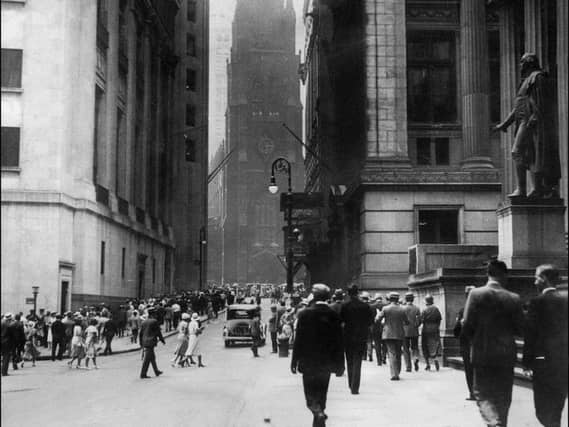
My brush with a missionary was different. A Franciscan friar in full regalia invited me out to McManus’s pub. His name was Anthony McCormack, Brother Anthony, a returned yank, back to Dundalk for the first time in fifty years. I always think of him when I see The Dalai Lama. He had an aura of peace and calm that extended to you and made you feel good. I was used to monks as missionaries - roaring and shouting - but Anthony was more like the saint he followed, you could see birds lighting on his hands. And as well as that he was great craic. He had gone to New York at the start of the 1900s and worked as a tailor, only to find himself during the Depression unemployed and destitute. In desperation he joined the Franciscans. His plan to get a bed to lie on, a bite to eat, a refuge to ride out the storm.
He had no intention of staying but found he had a vocation, took his vows and remained for life. His work was with the poor of the Bowery, practical Christianity, helping in a world of soup kitchens and second hand clothes. Anthony was a wonderful story-teller and I was privileged to have him all to myself. He liked Porter, Joe Di Maggio, Babe Ruth, Ella Fitzgerald and he told me this story. A young man came to their building and asked if he could join.
They had become an older settled community through a dearth of vocations and were pleased if hesitant to have a recruit. It was decided to assign him a cell with the other monks. He was to take a month to experience the monastic life, after which, if he still wished, he could begin as an apostolate. At present there was no need for him to change his long hair and fashionable Times Square appearance. He would continue to carry his embroidered cloth bag with plaited cord shoulder strap and he was given the first part of a monks outfit, sandals with no socks. There were five monks in the group and they were all taken with the young man's enthusiasm.
He did everything asked of him and took on additional unsupervised work as well. He ate sparingly and went straight to his cell after the evening meal. It was behaviour that pricked everyone’s conscience as they savoured an end of the day whiskey and cigar. His striking himself with the cord from his bag troubled them. It was no longer a practice encouraged by the Order, but it did seem to underline how far down the path of easy living they had slid.
Five days later the beatnik was gone and it was some months later when Brother Anthony met him on one of the streets off Times Square. ‘Gee man it's good to see you’ he said. ‘Sorry I couldn’t make it on your trip’. ‘It's fine’ said Anthony ‘Your few days with us were so important, you made us question ourselves, we're fasting a bit more and cutting back on the alcohol and cigars’. It was news that troubled the young man. ‘I’m afraid I didn’t quite level with you guys’ he said. ‘Livin’ it large out on the street. Beers, grub -- you know -- glad to get back to the cell to sleep’. ‘But striking yourself with the cord’ Brother Anthony said. The beatnik looked further downcast. ‘Gee man, I thought you had to do that, so I just struck the wall.’