

The Dundalk woman giving a voice to teenage girls with autism


A new exhibition based on a research project by Dundalk woman Gillian O’Hagan is helping to give a voice to girls with autism. Belfast-based Gillian created Missing Voices - a participatory photographic project about the lives of young women with Autism Spectrum Disorder (ASD), as part of her doctoral research at Queens.
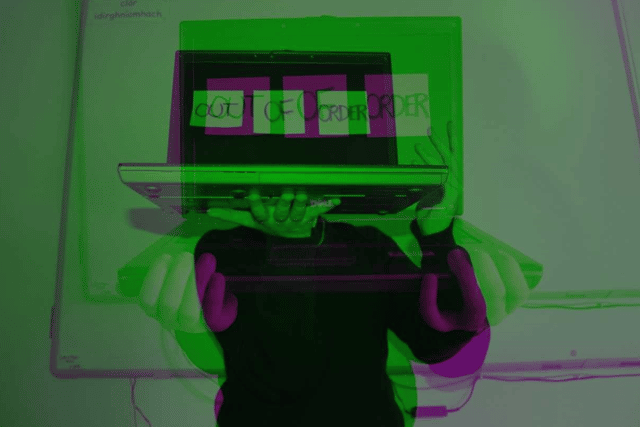
The poster for Gillian's exhibition Missing Voices
At the beginning of her career, whilst working as an SME teacher in Belfast, Gillian spent her summers working on the autism provision scheme at St Brigid’s school in Dundalk where she formed a special bond with youths with autism. A decade on and
Gillian’s moving exhibition, Missing Voices, has been shown in Queens University Belfast, The Long Gallery at Stormont and she is currently preparing for Missing Voices to be shown in the Atypical Gallery as part of Belfast International Arts Festival from October 22 to November 15.
Whilst Gillian says she is “still pinching herself” over the success of her exhibition so far, the biggest reward for the Dundalk woman has been the hope that it could lead to a greater understanding of and brighter futures for those with Autism Spectrum Disorder.
Explaining the reasons she decided to choose this research topic, Ms O’Hagan explained: “We would see a high intake of kids with autism [at Aquinas Diocesan Grammar School]. We saw loads of girls with OCD and school phobias. When autism isn’t diagnosed - we know girls internalize things, so they will present with anxiety, incidents of anorexia and they would be referred to CALMS (Child and Adolescent Mental Health Services).
"I was working one on one with the students but all of the studies for children and teenagers with Autism Spectrum Disorder use male samples - so as a result, we find loads of girls slip through the cracks.”
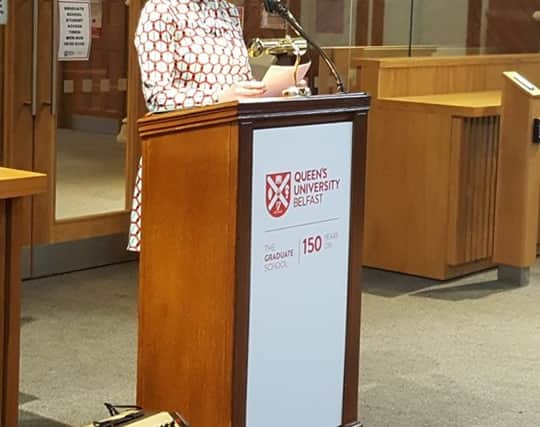
Gillian speaking in Queens University, Belfast
Ms O’Hagan added: “During my research, I realised I didn’t want to present my work as a girls versus boys argument, so I decided it was more important to just listen to the girls. Autism is a social and communication disorder so I had to think of a way of approaching the interviews that would work for the girls.
"I used a method called photovoice photography, which has been used for 25 years as a research method. It’s used with groups who can’t have their voices heard and for marginalised communities, and it doesn't put too much pressure on the participants. I couldn’t believe the attention the research got.
"It was put on in Queen’s University. All of the girls came along and took their families. Then the Green Party tabled a motion to bring my exhibition to the Long Gallery in Stormont for two weeks. The exposure was incredible!
“A lot of social policy groups came along and there were rumblings that the Northern Irish Civil Service would use the research to inform their workplace policies for employees with autism. BBC Newsline also got in touch. I’ve been pinching myself!”
Gillian says the biggest eye-opener from her research was the pressure that girls with autism were under in their everyday lives. She explained: “The biggest revelation was how much hiding and masking these girls are doing on a daily basis. They are holding it together at school and then coming home and falling apart.
"It was a lovely thing for the girls to be able to tell me the ways they have found to cope. Some of the girls write stories, some go running. And at the debut exhibition in Queens, all of the girls were sharing their tips with each other.
The girls’ parents all came along too. It was very moving to see how affected the kids were. Everyone was crying. There was a lot of love and support.”
Overall Gillian hopes her project will help people to be more understanding when it comes to dealing with people with autism. The Dundalk woman, who plans on presenting her findings at upcoming autism conferences, added: "My biggest concern is the mental health outcomes for young women who are hiding their conditions and struggling with suicidal thoughts and self-harm.
"I think by spreading awareness, we can tackle the ignorance surrounding the condition and have better adult life outcomes for girls with autism. We saw a student recently going on TV to talk about the exhibition and another student went on to study astrophysics. We need to let people know that autism doesn’t define these girls.”
Ms O'Hagan says she is open to offers to bring her groundbreaking exhibition to Dundalk: “I would love to bring the exhibition to Dundalk! I think autism provisions are very advanced in Dundalk - places like Realt na Mara are fantastic.”