

Louth Oireachtas members hear of neurorehabilitation inequalities and ‘postcode lottery’


NAI survey finds critical gaps in neurorehabilitation services across the country
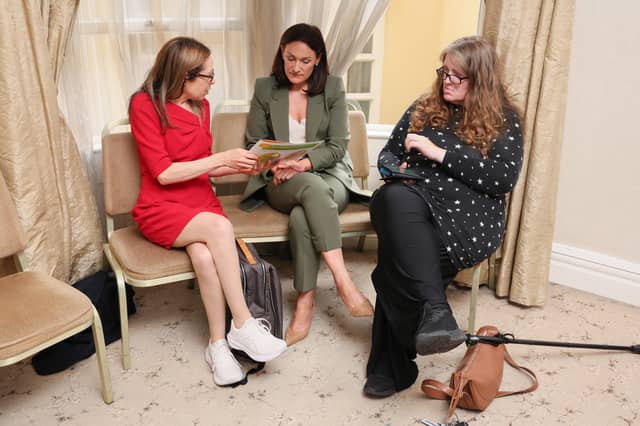
The Neurological Alliance of Ireland (NAI), the national umbrella body for over 30 neurological organisations, met with Louth Oireachtas members at a pre-Budget event held this week, at which NAI members raised concerns about what they say is, "The government’s slow response on neurorehabilitation services is creating a postcode lottery and exacerbating health inequalities for those most in need."
Louth representatives Erin McGreehan TD, heard at the event in at Buswells Hotel, Dublin, that gaps in neurorehabilitation services mean that a quarter of those surveyed for, ‘The Right Care in the Right Place: Access to Services for People with Neurological Conditions Across Ireland,’ report have never been able to access neurorehabilitation.
Oireachtas members also heard that 58% of respondents in the Midlands had been unable to access community neuro-rehabilitation over the past 12 months.
In its pre-budget submission, the NAI is calling for investment in four community neurorehabilitation teams in order to deliver on the Programme for Government commitment to complete the rollout of community neuro-rehabilitation teams across the country. The North West, South East, North Dublin and the Midlands have received no funding to date for teams promised in the 2019 National Implementation Framework for the Neuro-rehabilitation Strategy.
The Neurological Alliance is also seeking funding for the provision of 45 regional inpatient neuro-rehabilitation beds across the South West and Midlands regions to begin to deliver on the Programme for Government commitment to tackle the national shortfall of 175 beds nationwide.
Liam Lynch, a patient advocatefrom Oldcastle Co. Meath, which falls under the Midlands community neurorehabilitation team area shared his personal experience of living with a neurological condition and the impact of lack of services in the region.
Liam has been living with an acquired brain injury (ABI) since 2017, after being knocked off his bike by a car, during a charity cycle. Despite experiencing multiple side effects afterwards, including memory loss and struggling with work, he only learned that this was due to having an ABI, as part of a check in with his neurologist two years later. He is now retired, and he and his wife are carers for their daughter who has learning difficulties and physical disabilities.
“For years I really struggled with everyday work-related tasks that previously I wouldn’t have thought much about before the accident. In particular, carrying out online research for the PLC course I was teaching in Dundalk at the time, really caused me problems, and I felt like I was going crazy.
“It was only during a routine check in with my neurologist where I mentioned this struggle and his response that it was to be expected because I was living with an ABI, that everything suddenly made sense. I’d spent two years wondering why this was happening and now I knew why. A change in personnel at his office meant my GP had never received the report which diagnosed the ABI.
“My neurologist introduced me to Acquired Brain Injury Ireland and they’re the only ones providing support to people like me in the area. I spend time in their club house in Navan every week. They’ve given me help with understanding and managing my brain injury.
“One person went out for a cycle that day in 2017 and a different person came back. I won’t recover from the ABI, but I have learned to live with this ‘new normal’, now I understand why I am the way I am. While I am grateful for the support from ABI Ireland it is vitally important that the community neurorehabilitation teams that have long been promised are introduced in the Midlands. Patients like me, and many others living with neurological conditions, deserve access to care and treatment that enables us to live and enjoy a better quality of life.”
Magdalen Rogers, Executive Director of the NAI, welcomed the recommitment to deliver on promised neurorehabilitation services in the Programme for Government published this year, however she says that the longer the government falls short on its responsibility to patients, the greater the inequalities experiences across the country.
Ms Rogers said: “The importance of community neurorehabilitation teams cannot be understated. The specialist service and care they deliver within the community for people with a wide range of neurological conditions is proven to reduce hospital stays by an average of three days per patient. These teams also play a critical role in avoiding further admissions to hospitals and long-term care.
“A community neurorehabilitation team for the Midlands has been promised since 2019. NAI is seeking funding in this year’s Budget to deliver the long promised community neurorehabilitation team for the Midlands. The NAI survey showed that 58% of respondents in the Midlands had been unable to access community neuro-rehabilitation over the past 12 months.
“In 2019, the government committed to funding nine community rehabilitation teams. To date only five of those regional teams have been delivered and there remains gaps within those services. The 2019 Framework also committed to creating 306 neurorehabilitation beds. A 2024 HSE report found there is a continued shortfall of 175 beds nationwide.
“The results of our own survey, which we’ve shared with TDs, highlights the reality of these gaps in neurorehabilitation. Behind these percentages is the reality of thousands of people throughout Ireland being denied the right to rehabilitation enshrined in the United Nations Convention on the Rights of People with Disabilities”.
The NAI represents over thirty charities advocating for the rights of over 860,000 people in Ireland living with a neurological condition.
For more information, visit www.nai.ie.