

Louth based RNLI assists Rescue R116 in saving two fishermen

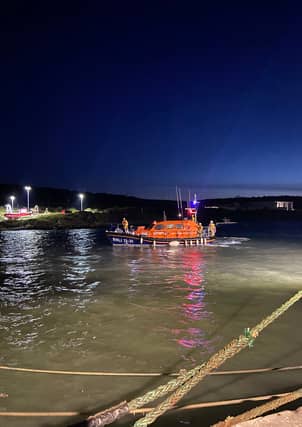

Clogherhead RLNI were requested to stand by while the helicopter crew carried out a winch recovery
In the early hours of Wednesday morning, Clogherhead RNLI was requested to assist Rescue 116 after an EPIRB alert was received off the Drogheda Bar in Louth.
At 12.20am, the volunteer crew were requested to launch their all-weather lifeboat by the Dublin Maritime Rescue Coordination Centre to assist the Irish Coast Guard helicopter, Rescue 116 from Dublin, following the activation of an EPIRB (Emergency Position Indicating Radio Beacon) approximately four nautical miles off the Drogheda Bar.
Rescue 116 was first on scene and located two fishermen in the water after their vessel had sunk. Upon arrival, the Clogherhead RNLI volunteer lifeboat crew — Coxswain Tomas Whelehan, Derek Shevlin, Brian Sharkey, Denis Levins, and Carol Holdcroft — was requested to stand by while the helicopter crew carried out a winch recovery in calm seas and good visibility. The lifeboat crew provided support by positioning searchlights to assist with the operation.
Both casualties, who were wearing life jackets, were safely rescued by Rescue 116 and transported to hospital for observation. Clogherhead RNLI subsequently recovered the EPIRB from the water before being stood down and returning to Clogherhead Lifeboat Station.
Speaking following the call out, Clogherhead RNLI Coxswain Tomas Whelahan said: ‘We were very happy that the two fishermen were safely rescued from the water and that their lifejackets were in full working order, which ultimately saved their lives. The activation of their EPIRB was also crucial in alerting rescue services quickly to their location.
‘We urge anyone planning a trip to sea to ensure your vessel is well maintained, has adequate fuel, and that all crew members have properly serviced lifejackets or suitable flotation devices. Carrying an EPIRB or other appropriate emergency communications equipment can make all the difference in a life threatening situation. If you get into difficulty or see someone in trouble, call 999 or 112 and ask for the Coast Guard."