

Lecture on the role Louth women played in the Irish Revolution

If you have an interest in the Irish Revolution and would like to learn more about the role Louth women played you need to attend the fascinating talk being organised by Annagassan District Historical Society.
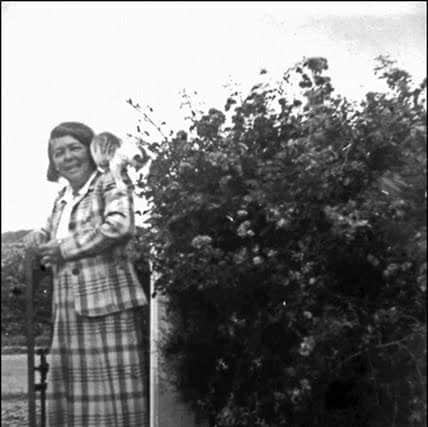
Bridget Kelly with kitten, a member of Grangebellew Cumann na mBan
Speaking to the Dundalk Democrat, Ailbhe explained: “I’m in the final few months of my PHD in Maynooth. My PHD topic is ‘The experiences of women during the Irish revolution between 1900 and 1923’.
“The talk will focus on the mid-Louth area - Togher, Annagassan, Ardee, Dunleer and Louth Village. My PHD research covers all areas of Louth - Dundalk and Drogheda, but there is so much to talk about and the lecture is just one hour long!”
Ailbhe says became interested in the topic of the roles Irish women played in the revolution after studying the topic for her Masters in 2012:
“I began researching the Cumann na mBan, which is the women’s equivalent of the IRA in 2015. I decided to open up my research to all of Louth.
“In the talk I’ll be giving in Togher, I’ll be covering the role of the Cumann na mBan. The first branch in Co Louth was founded in Dundalk and word spread to the rest of the country. (Its founder and first president was Angela Matthews). The Easter Rising was the catalyst for a lot of women getting involved.
“The Cuman na mBan sent out directives from their headquarters in Dublin to send organisers out across the country to set up branches. A lot of the women’s brothers were in the IRA and that’s how they became involved after the Easter Rising.
“A lot of the women in the Cuman na mBan were also nurses in the First World War. And there were a lot of public funds being collected by the dependants of the men who were in jail.”
Ailbhe says that one of the most interesting characters she encountered in her research was Bridget Kelly from Grangebellew outside Dunleer.
The local historian explained: “Her two brothers were in the IRA. And there was a tiny bit of activity in Louth during the Easter Rising.
“Bridget made buckshot pellets (the shot that goes into the shotgun) and she became more involved in carrying messages.
“She also held up a train in Grangebellew. During the war of independence there were pograms in Belfast against the catholics. So the IRA decided to respond by boycotting Belfast goods coming down on the train in areas across Ireland.
“IRA men and women stopped trains with Belfast goods coming down. The goods were thrown off the train destroyed and burned.
“Later during the civil war, she was arrested by the free state authorities and was imprisoned in Kilmainham jail for eight months.”
When asked if there are any areas she particularly enjoyed researching Ailbhe says the violence inflicted on women during the early 1900’s stands out.
Ms Rogers explained: “There was one woman during the War of Independence who had her hair cut off.
“The woman was from outside of Dunleer and there was a rumour going around that she was going out with a British soldier.
“One night in April 1921 a group of men called to the house, dragged her outside and sheared her hair off.
“The woman brought her case to the court which was unusual at the time. Many women didn’t speak up when they were victims of violence for fear of retaliation. She was awarded 40 pounds compensation.”
For more stories like these head along to Ailbhe’s talk on 'The experiences of women from mid-Louth during the Irish revolution, 1916-23' takes place on Thursday, December 12 at 8pm in Dillonstown Hall, Togher, Co. Louth. Admission is €5 and includes tea and coffee afterwards.