

It's the season for garden allergies: Dundalk landscaper gives natural remedies for hayfever

Kimmy Hodgetts and Sean Phelan give advice about natural remedies to combat hayfever so you can enjoy the great outdoors
Although this time of year is a great relief for many as we have finally reached a point where we have shaken off the worst of winter.
Spring and summer may bring a flourish of beautiful flowers that bring joy to many, but it also carries a level of dread for many that suffer with seasonal allergies.
Hayfever is a funny thing. Anyone can develop it at any age, so do not think that you will always be safe just because it doesn’t currently affect you.
I have known the misery of hayfever but (thankfully) it was only for one summer.
I was on holiday in Cornwall and suddenly developed bad sinus issues and horribly irritated, itchy eyes that I wouldn’t wish upon my worst enemy.
After suffering for several days trying to convince myself that It can’t possibly be hayfever, I resigned myself to the obvious: it was hayfever.
Some plant local to the area had taken a dislike to me and was making its opinion well known.
Not content with slathering my nostrils in Vaseline and locking all the doors and windows like some conspiracy theorist waiting for aliens to descend; I was determined to go out and enjoy my holiday to the fullest.
Alongside the usual store bought solutions, in my desperation I thought that I would also look for some natural remedies.
Stinging nettle and purple dead nettle are not related at all but share more similarities than just their names and the fact that they are commonly found in any unkept land.
They both contain a natural antihistamine, high levels of vitamins and have anti inflammatory properties.
Perfect for fighting off that pesky pollen.
If you dare not brave the outside world long enough to gather some, many health food stores sell stinging nettle that has been freeze dried and put into a pill. #
Garlic also has similar properties with the bonus that it is probably already in your kitchen, this is also available as an odourless pill in health food stores just in case you have a date planned with a vampire and don’t want to scare them off.
Honey gathered from local hives is also said to be highly beneficial as it will naturally contain a small amount of pollen that will help build up a tolerance to the offending plant, assuming that the bees have visited the species of plant that affects you; but honey is delicious and you would be supporting your local beekeepers to buy some, so there is no loser in this scenario.
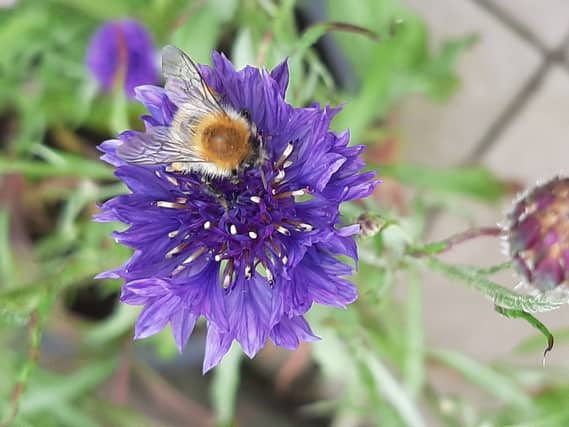
Bees and wasps are also a serious threat to those with allergies, as much as I love them, I appreciate that they are not welcome everywhere.
Beyond telling you that they don’t sting unless it is a last resort, and to just give them space and they will leave you alone, but fears are irrational and cannot be reasoned with that easily. There is still no need to lock yourself inside if their presence causes you anxiety, we just need to give the bees a reason to leave your garden alone.
I’ve read a few times on the internet that peppermint and lavender repels bees; let me use this as a fine example of “don’t believe everything you read” as it truly is quite a ridiculous claim, I have both lavender and peppermint and I can say first hand that the bees adore them as much as they adore any other nectar producing flower.
The only real way to reduce the number of bees coming into your garden is to avoid any kind of flowering plant that they will be attracted to. Keep your lawn mowed and fill your garden with ornamental grasses, decorative hard landscaping, colourful paint and art; a garden really can be a thing of beauty even without a single bloom.
All you need is a little imagination.
Allergies are not fun, but all we can do is make the best of what we have. If hayfever is what bothers you, now you have the reassurance that it may not be an issue in another locality.
This is a great reason to finally move to your dream home that is far away from home.