

Inside Track: Running the rule over some of the rules

Though they’re changing all the time, the rules of Gaelic football are familiar to me. I wouldn’t agree with some of the more-recently introduced, the ’mark’ being one of them.
Just think of it, if a forward makes a catch, and puts his hand in the air, a free in is awarded. What many do not know, but a defender gets the same concession, once the ball is kicked from beyond a certain distance.
This hasn’t removed one of the great features – high fielding – from the game; it just makes it easier for the player in possession and lessens the chance of another of the great skills, a block, being applied.
The rules of most other sports haven’t changed much, if at all, and for me, at least, are easy to understand. In snooker, whoever pots the black gets the frame, and whoever claims most frames wins the game.
There’s a cue, rest, spider, cushion, pocket, chalk and a triangle (it was an old one we had when the table was the main feature of the Dundalk Gaels’ clubrooms – commonly known as the ‘Hut’ – back in the day.)
Is the term ‘hook’ familiar to Dundalk only? This is when a player, finding the cue ball, the white, blocked by another, has an obstructed view of his target. TV commentators, and probably everyone else other than those who frequented The Labourers, The Boyles, The Commercial Club, etc, in former days, call it a ‘snooker’.
In darts, all a player has to do is stand behind the oche and throw what’s known in the game as an arrow. A treble 20 is the main target, but regardless of how many times a player hits this red bit, the leg can’t be won without finishing with a double, which is to be found on the outer ring.
There’s also a bullseye, which is the name given to the rat-old programme going out each night on Sky. I don’t know why – maybe it’s the programme’s simplicity, or maybe the host, Jim Bowen’s corny jokes – but I look in most nights. Sad, but true.
I wonder is there the makings of a series there, a follow-up to this and other such programmes, the likes of The Chase and Who Wants To Be A Millionaire?, to see how the contestants, especially the big winners, got on? Where Are They Now, perhaps, or maybe, What Did You Do With Your Dough?, or, in the case of a Bullseye, Have You Still Got The Garden Rake?
If you’re ever asked in a quiz what’s a ‘Shanghai’ in darts, write this down, a finish on a single 20, a treble 20, and a double 20 – 120 in all.
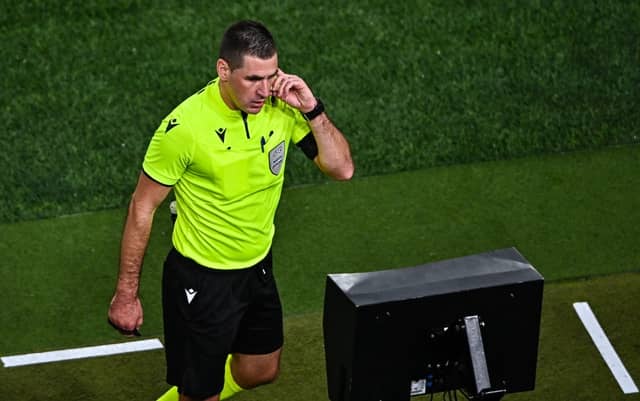
The most recent change to soccer has been the introduction of VAR. This is technology which is there to assist the referee when there’s a doubt about, say, a hand-ball or an offside.
Like the decisions it’s asked to adjudicate on, VAR is contentious. I’m on the side of those who believe it should not be used for offside. A player who’s six inches over an imaginary line hardly deserves to be deprived of the goal s/he goes on to score.
Unlike Hawkeye, the Croke Park legislator when it comes to deciding if a ball has gone over the bar or wide off it, VAR, or at least those who control it, don’t always come up with an immediate answer. On the Saturday before last, six minutes passed before Burnley were told their goal wouldn’t count. Vincent Kompany, their manager wasn’t pleased.
Hand-ball is different. A player does or doesn’t infringe, and, yes, had VAR been around when Thierry didn’t so much as handle the ball as scoop it, the Republic of Ireland’s World Cup prospects would have been enhanced. And Maradona’s “Hand of God” in Argentina’s win over England would also have been ruled out.
We’re now at rugby, and here I’m completely lost when it comes to what is or isn’t an infringement. No, make that the rules in general. For one, who gets the throw-in when the ball is kicked over the touchline?
Someone who I used watch Ireland games with when Niall Brophy, Sid Miller, Ray McLoughlin and the likes were in the green jersey and Amhrán na bhFiann and the opposition’s anthem were the only music hearde before kick-off, couldn’t understand why supporters cheered when the ball was kicked out of play.
I watched the World Cup final at the dogs on Saturday night, and had a mate plagued wanting to know why the referee had awarded this or that. He obviously had his fill of it by the time I asked him were there little spikes on the device from which penalties and conversion attempts were kicked. “I DON’T KNOW!”.
Now knowing where I stood, I went home to watch the second half.
But for all that, my ignorance of the rules in particular, I enjoyed the World Cup, not missing any of Ireland’s games, and being enthralled by South Africa’s fightback against England. Owen Farrell was brilliant in this game and the one before that, and didn’t deserve to be on the losing side.
It’s not known at the time of writing if Farrell has made it on to the team of the tournament, but what has already been decided is the choice of his father, Ireland head coach, Andy, as manager of the year.
I wonder would Farrell senior’s head be turned if an offer came in from Down Under. Australia, once the world leaders, had a dreadful tournament, failing to make the knock-out stages. It wasn’t long after the football was over that the Wallabies parted with their unsmiling coach, Eddie Jones.
There are rules attached to horse and greyhound racing. They’re often broken, but it’s getting more difficult for the wrongdoers.