

Huge surge in numbers contacting Women’s Aid Dundalk during lockdown
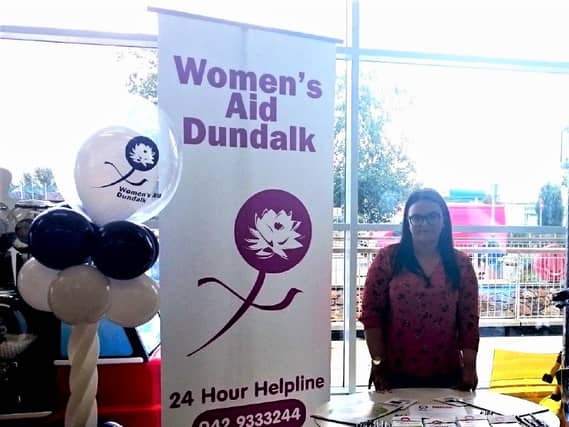

Interview: Big surge in local women using domestic abuse support service
The number of local women seeking support for the very first time from Dundalk Women's Aid almost doubled during the Covid-19 lockdown, according to the local support group this week.
Speaking to the Democrat, Megan Bellew, a support worker with Women’s Aid Dundalk said they had seen a “significant jump” in women and children seeking help in comparison to a normal three month period.
“We noticed we have a lot of new people who are coming to our service who have never gotten support from us before, so that was their first time making contact,” explained Megan.
“Between April and June we had 197 women accessing our service for the first time. That is a significant jump in comparison to normal. We would probably still have maybe around 100 women in that kind of time period, but that’s almost doubled.
“Throughout the period of the lockdown, altogether, (between) new people accessing the service and people who would continually get support, we had 275 women actively availing of support throughout that time. So we had very, very high numbers of women using the service.”
This “surge” in numbers put a significant strain on what the local refuge could provide in terms of in-house support and accommodation. According to Megan, they were unable to accommodate a number of families.
“From April to July we couldn’t meet 110 requests for refuge. So that was 110 times that somebody had called to look for a room and we weren’t able to accommodate them. That’s quite a significant number.”
Megan continued: “For the first few weeks of lockdown we saw a change, I think people really didn’t have opportunities to get to a phone to make contact and that was quite evident for the first few weeks.”
She added: “Making a phone call in the middle of lockdown wasn’t exactly ideal for a lot of women. Something that we’ve noted, obviously at the start of lockdown in particular, it would have been the phrase ‘Stay Home, Stay safe’ and for the women and children who need our service, home is literally the most unsafe place to be for them.”
Despite the increased demand, Dundalk Women’s Aid say they have managed to maintain service through the lockdown, however Covid-19 restrictions has forced the group to change how they provide their services.
“With our refuge, some things had to change because it is communal living,” states Megan. “That would have meant that families would have had to share things like the kitchen and living rooms and bathrooms etc. So what we had to do was introduce social distancing and we had to move a few of our families out into the community and different houses.
“We would have worked with Louth County Council on that. It was just to allow them to be in a safe place due to Covid. The refuge would be safe in one element, but when it came to Covid things changed.”
Megan adds: “So I suppose we looked at how we can do things differently. Are there other ways people can make contact?
“We are very active on our social media and that’s another way people can make contact, it’s a bit more discreet than making a phone call.
“As well as that we were providing email support, so in general we always had our email address service that people could reach at any time. What we decided to do was we dedicated specific hours of the week that if someone needed to contact us in an emergency that we could get a response to them immediately. We’d be on our email service and we called it ‘live support’. So we dedicated a few times a week to do that.”
The physical act of being locked-down in a house with an abuser, with no outlet, led a lot of women to see, possibly for the first time, the extent of the abuse and isolation they were enduring.
“What I would have heard quite a bit was that people may have started to realise how difficult things were for them,” adds Megan. “When they’re in their busy lives, they are going to work, they’ve children, they’re out and about and they know what’s happening.
“It’s not that they aren’t aware, but I think lockdown sort of made them more aware of their situation and obviously in a lot of situations the abuse would have increased during lockdown.”
She added: “It would have been used as a kind of excuse by many abusers, maybe by preventing a woman from going out to do the shopping, which she normally would have done. It’s not giving them that opportunity to get away from the house and maybe have time to make contact with family and friends.”
Lockdown brought isolation for many people, but it has been a “tactic” of abusers for a long time, according to Megan.
“Another thing is that a lot of women would have been isolated before this because isolation is a tactic that is used in abusive relationships, but because people couldn’t visit family and friends, the isolation was much more extreme. They might have had that opportunity when they went to visit their friends at the weekend and that might have been their ‘safe place’ or their break away from what’s going on at home and then they didn’t have that, so they were becoming increasingly isolated.”
Megan states that national campaigns around the issue of domestic abuse during the lockdown have been extremely beneficial, she feels.
“A lot of women would have actually been reading about it and learning some more information and possibly even realising that’s the situation they’re in.
“Very often a lot of women would believe that if it’s not physical, then it’s not abuse, which is obviously not the case. But because of the awareness campaigns going on they might have recognised that they might have been experiencing abuse and may not have realised it before.
“We did get a few people who would say that they didn’t realise that this is what is going on for so long.”
While women are the ones to make that initial contact to seek help, there are, in many cases, children caught in spiralling domestic abuse situations in the home.
“It is important to mention the children in all this,” Megan urges. “For a lot of children, going to school was their safe place or even for teenagers to meet up with their friends or going to youth groups and things like that was their safe place and they didn’t have that and they may seen a lot more in the home and experienced a lot more in difficult situations than before.”
Another impact of Covid-19, that Megan is keen to highlight, is on the education side of things.
“We had a workshop which would have been for teenagers and young people about healthy and unhealthy relationships. We used to deliver that to the schools, obviously we’re not sure how we’ll deliver that now and in September, so what we are doing now is prepping the workshop so if we need to give it to the teachers or facilitators of youth groups, that they can teach it themselves and it’s all electronic and give them the support that way.
“It’s really important that that work goes on, even if we can’t get out of the schools ourselves.”
Through it all though, Megan says, the local community have risen up and tried to help in nearly every way possible.
“There’s been a surge of people getting in touch who want to help, it’s been unbelievable - phone calls, emails and Facebook messages, people asking how they can help. A lot of people wanted to give their time, but obviously we couldn’t take on volunteers at this time. The community have been so supportive and the generosity people have shown has been unbelievable.
Megan adds, hopefully: “Maybe people had more time to think about how they could help and that definitely showed.”
Dundalk Women’s Aid can be contacted on 0429333245 or online at womensaiddundalk.net. They also provide a new text support service on 0861892439 which is available from 9am-4pm Monday to Friday