

Interview: Retired Louth teacher releases debut novel

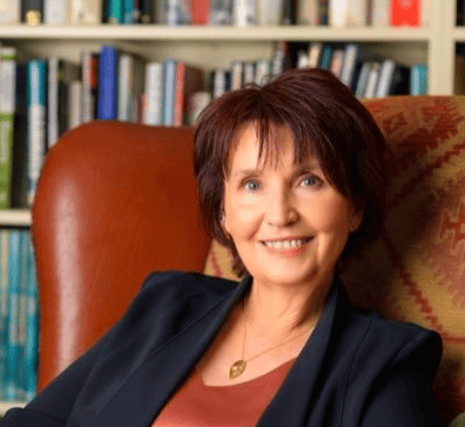

“I know it sounds corny, but it really was like a dream come true."
Local retired school teacher Florence Gillan has been making up stories for as long as she can remember.
“I first started writing when I was very young, I just loved reading,” she told the Democrat.
“It was like an addiction, and then I started telling my little sister stories in bed at night and then I started writing them down.”
Decades later and she has now written and published her first book, a mystery thriller called Let Them Lie.
In the book: Aoife O’Driscoll travels home to Sligo for a family gathering to mark the twentieth anniversary of her father’s death.
While there, the discovery of a long-buried box and its disturbing contents sends her on a terrifying journey through her family’s past.
Chasing secrets, while trying to hold her life together, becomes increasingly difficult. Breaking up with her fiancé Connor at a point when she desperately needs support, she falls deeper into an obsession with finding the truth, knowing that her investigations threaten to shatter the lives of everyone she loves – her mother, her brother Sam, her sister Kate, her young niece and nephew.
She is left to face the question: how high a price is she willing to pay to protect her family and can she live with the consequences?
“It’s a crime thriller, but it’s not a police procedural, there’s no detective or anything,” says Florence.
“The protagonist in the story, Aoife, in a sense becomes the detective in her own life and it’s about the things she discovers and her deciding what to do with this knowledge.
“There’s a dark underbelly to what seems like a perfect family.”
Originally from Lissadell in County Sligo, Florence left at 17 to become a Religion and History teacher spending most of her career in Louth and settling in Newry.
“I Worked on the Cooley Peninsula all my adult life. I started off in Dunleer and then in Dundalk at O’ Fiaich college and then I transferred to the Bush around 1985 or 1986 and I stayed there pretty much until I retired.
“It’s a special place I have to say. It was no hardship to travel down every morning and the views coming down from Omeath and into Carlingford were just lovely.
Florence wrote her first novel ‘Tragedies in France’ when she was nine years old, spelling the title ‘tragically wrong’ she jokes.
“I just knew that when I started writing I’d never felt happier either reading or writing, which was so exciting to me and I loved it.
“I read literally everything, from thrillers to classics, every kind of genre you could think of.
“I loved funny books like PG Wodehouse and Tom Sharp and people like that. I was totally addicted to Agatha Christie. Her plots are genius.
“I kind of lost the heart for it when I went to secondary school, because whereas in primary school you have lots of scope for imagination, secondary school is much more about exams and grammar and punctuation and those less exciting things.
“So I lost confidence in my writing for a long time and for many years I was talking myself out of it.
“Somebody had told me once that you had to have a plan when you were writing a book and sure I never knew when I was sitting down what was going to come out and so I just gave up really for a long time.”
Whatever spark Florence had was reignited in her forties when she read a book that suggested getting up early in the morning and writing three pages of what immediately comes into your head.
“So I’d get up early at half five or six and sit in the dark because I didn’t want to wake my husband or get out of bed, and I’d write things like ‘this is so boring, why am I doing this?’, ‘this is a waste of time.’
“But then gradually I found that I started to write out the sort of stuff that goes round in your head every day, your worries, your problems, the things you’re happy about, the things you’re sad about, and I did that every day religiously for about six months and it freed something in me I think and it started getting me to think about writing again.”
Buoyed by her new sources of inspiration, Florence started work on a novel with the initial chapters receiving praise from publishers who wanted to see the rest.
“I finished it off before it was ready and ultimately they rejected it,” Florence says.
“But it was a huge boost to my ego, and it gave me some encouragement because I thought it can’t have been terrible if they wanted to see all of it.
Parking her writing for a time, she came back to it during Covid focusing on an idea for a story that had been in her head for sometime.
“During Covid, I sat down and it just came. I bullied a few friends and family into reading it and they didn’t think it was awful, which I found encouraging.
“After some redrafting and taking some constructive criticism, which is not easy for a teacher, I decided to send it off to Poolbeg.
After a three month wait, she got her response.
“I got an email saying they were interested and wanted to see the rest but didn’t get too excited because I’d been there before.”
She needn’t have worried, however, because the publishers came back saying they loved it and offering a three book deal.
“I know it sounds corny, but it really was like a dream come true. I had wanted to do this my whole life and here I was at 61, and I’ve heard I was going to get this amazing thing I wanted all my life, and I was nearly afraid to believe it. It was mind blowing.
Florence’s success surely has something to do with her dedicated writing schedule.
“I’m definitely not one of these people that writes at night, I might think about stuff to do with the book at night but I start around 9 o’clock in the morning work for and hour and a half or two hours take a break for a couple of hours and then go back and stop at around 7 o’clock.
“If I’m stuck on something, I’ll take a notepad or my phone to bed so that if I wake up and think of something I can write it down and hope it makes sense in the morning, which sometimes it doesn’t. Sometimes you wonder what in the name of God were you dreaming about, she laughs.
“I think you use everything around you when you write a book, even hearing scraps of conversation. You think ‘oh my God that line was brilliant,’ you get inspiration from everywhere.
“I love the actual writing. It’s the drafting and redrafting that’s the hard work and having to listen to people critiquing it can be challenging.
But I have to say my kids have been fantastic with things like the language used by young characters, and it is mainly young characters in the novel.
“They would say to me `look, that doesn’t read like how a young person would put that.’
“So a few times they’ve directed me and I’ve changed some of the language around things like slang.
“But having people willing to read and critique is something I’ve found so helpful. Sometimes you fall in love with an idea and you need someone to say you’re talking too fancy there and you’re going to alienate anyone who reads it.”
As for her next book, Florence has already been busy working away.
“They’re interested in having another out this time next year and I have a rough, rough draft of a second one done and I’m hoping they’ll like it and if they do, it’s a matter of making it better and doing some drafting.”
Florence’s book; Let Them Lie is available in a wide range of bookshops and online with signed copies available in Easons in Dundalk.