

From Germany to Dundalk: The remarkable life of Helge Hollerieth
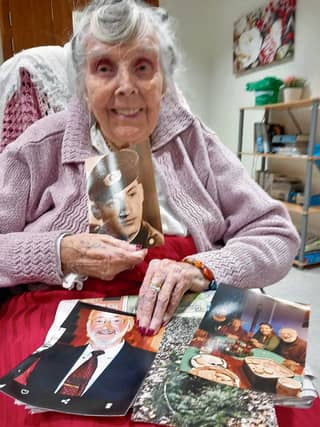

Helge Hollerieth was fostered by the McGee family in Dundalk after World War Two
Operation Shamrock brought German children to Ireland after WWII, offering them refuge and a chance at a new life. Helge Hollerieth, one such child, was fostered by the McGee family in Dundalk. Decades later, thanks to the efforts of local man Alan McKenna, Helge’s story has been rediscovered. Helge Hollerieth was born on the 16/07/1939 in Berlin, Tempelhof and died on the 07/02/2024 in Hirschberg, aged 84.
Helge being a German was also a Dundalk and Louth man.
After World War Two Many German children’s situation was desperate and for various reasons they faced starvation.
Neutral Ireland decided to help and ‘Operation Shamrock’ was a plan to help children travel from Germany to Ireland and was organised by the Red Cross and the ‘Save the German children society’ whereby Irish families would foster Catholic German children for a period of time before they would return home.
The safe passage of the children through England was facilitated by Field Marshal Mongomery who considered himself Irish as he had family in Donegal and his grandfather was born in Derry.
Initially the refugees were housed in Glencree, County Wicklow and the German spy Hermann Görtz being an army major was the adminstrator of operations in the Glencree centre as he spoke German and English and could organise disipline and order among the children.
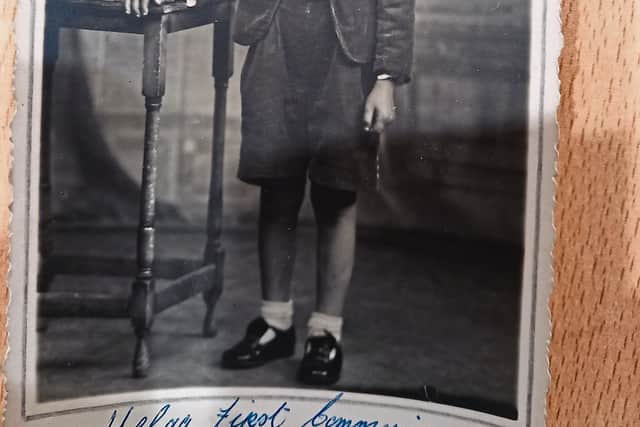
Helge on his First Communion Day in 1947 when he was attending the CBS in Dundalk
Geraldine Mc Gees father, Captain Mc Gee agreed to accept a child and his family took care of Helge in Dundalk, Haggardstown for two years until his mother asked for his return to Germany.
Helge`s brother Klaus Hollerieth was also fostered by another Dundalk family returned the same time back to Germany as Helge did.
Upon his return to Germany Helge failed to settle in and asked to return to Ireland and again stayed with the Mc Gees in Dundalk until he was aged 17.
During his time in County Louth Helge attended the Christian Brothers primary and secondary schools and spoke Irish (and English) fluently, winning Feis for singing in Irish.
Helge then decided he wanted to learn more about his roots and returned back to Germany in 1957.
The Mc Gee family where assured by Helge`s family that he would have a better future in Germany.
Geraldine Mc Gee recalls meeting Margaret Burke Sheridan (a famous singer) at Dublin airport who was taking the same flight as Helge. Ms. Burke kindly offered to let Helge sit beside her on the flight and to take care of him until they have reached the other airport safely.
Unfortunately, certain assurances Helge received before returning to his family didn’t transpire and so he went roaming around Germany alone.
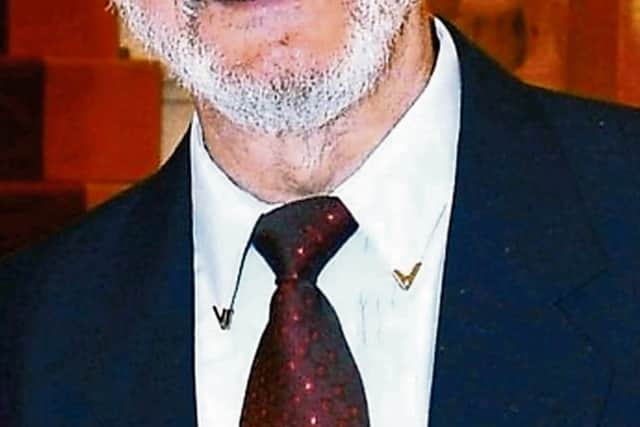
Helge Hollerieth
Now being of the legal age, he was then forced to join the military.
East Germany or the German Democratic Republic (GDR) was founded on the 7th of October 1949 and a cement wall was built up in Berlin in 1961 – the “Iron Curtain” as the people called it remained until the reunification with West Germany on the 3rd of October 1990.
Helge finally found true love with his third wife Gabi and her daughter Andrea in East Germany and married Gabi in Leipzig in 1972.
He applied under the Helsinki agreement under a reunification clause to look after his grandmother in West Germany as life was quite tough – without any freedom of speech or travel on the Eastern side of the Berlin wall.
Being very gifted technically he drew plans to build a small aircraft to escape from the East but there was no way to make it small enough to stay secret yet big enough to carry his family.
When his application was finally granted in 1975, he was given only a 24 hours’ notice before his family was to depart, which meant meeting Gabi’s family for one last goodbye in Leipzig before their move to West Germany by train arriving at their new future early in the morning the next day.
Read Next: Dundalk makes clean sweep in litter survey
The family had to go to a reception/refugee camp in Giessen for a two -week duration. There they were examined and questioned, received new passports and 50 Deutsch Mark per person and in the end – departure from there -receiving only good luck wishes and out into their new world to fend for themselves.
After this Helge, Gabi and wee Andrea moved around Germany as economic nomads in search of work, they moved approximately 12 times in three years.
They eventually settled in Hirschberg where Helge worked as an assistant manager on a chicken farm.
Helge learned to make carpets and rugs as a hobby.In 1997 Helge and Gabi travelled to Dundalk where Geraldine Mc Gee recalls finding Helge crying at the grave of his old dog ‘Rebel’, he told Geraldine that leaving Ireland had been ‘a mistake’. He was married three times, had two daughters (one his step daughter) and four sons (two step sons)Helge was cremated and laid to rest in a ‘rest forest’ where there is a sign with his name attached to a tree, he had liked to walk in this forest alone when alive.
The ‘Three Fates’ fountain in St Stephens Green, was donated by the West German Government to the people of Ireland in thanks for Operation Shamrock and can still be seen there to this day.