

From Dundalk to the moon: The man who helped land Apollo 11
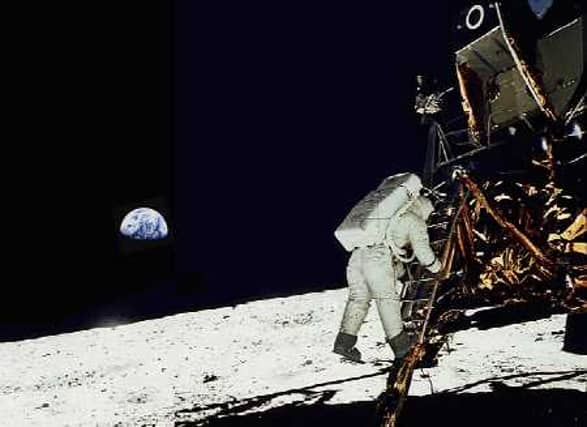

50 Year Ago
Pat Norris, by his own rather modest admission, played a “small part” in landing Apollo 11 on the moon fifty years ago on July 20, 1969.
Then again he also happened to have lived in Dundalk up until the age of 9 - so he’s probably just downplaying his importance in one of the biggest events in the history of mankind!
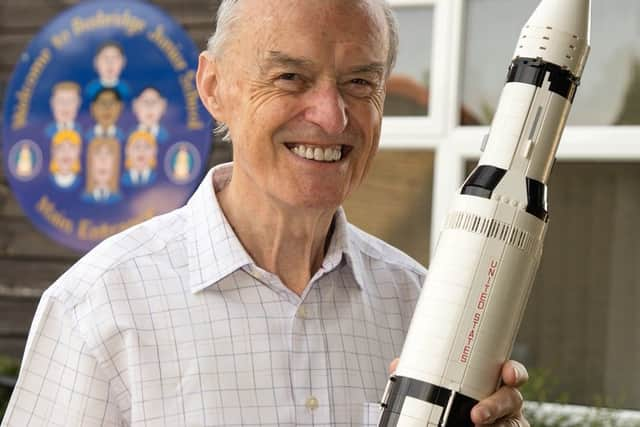
PICTURED: Pat Norris in 2019 with a model of the Apollo Saturn rocket
The up-and-down nature of the moon's gravitational pull meant that landing on the lunar surface was a tricky proposition to say the very least.
Pat led a small team in overcoming this problem. Still, each orbit the team predicted for the Apollo mission would be several kilometres out by the time the figures were run.
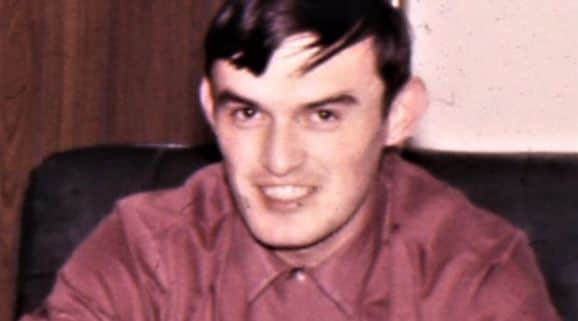
PICTURED: Pat Norris in the summer of 1967
Speaking about it in an article in the Irish Times, Pat recounted those nervy final minutes: "we noticed the overshoot of Apollo 11 as it came from behind the moon a few seconds earlier than expected on its last orbit before the landing."
He explained that touch-and-go moment further in an interview with the Evening Standard in 2016: "It was a close call, Neil Armstrong had to fly the capsule a few miles further to avoid some boulders and almost ran out of fuel, but I was able to use that information to land Apollo 12 bang on our target."
Pat would be a part of the Apollo missions from number 8 through 13. After moving from Dundalk to Stillorgan as a child, he went on to study maths and physics in UCD which would, in 1967, lead to him taking up a job with TRW, who worked with NASA in the States.
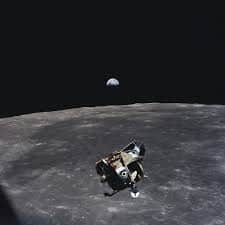
PICTURED: Photo taken by Michael Collins of the Eagle
Pat describes the Apollo 11 crew - Buzz Aldrin, Michael Collins and Armstrong, as “fully focused during their mission, but articulate and happy to engage in banter and generally let their hair down when off duty.”
Now living in the UK, Pat was born in Dublin, but lived in Dundalk until he was nine.
Before settling across the Irish Sea in later life he bounced from Holland to France - working for various space agencies.
In October 2016 he received the Sir Arthur Clarke "Lifetime Achievement Award" in a ceremony at the Royal Society in London.
Having retired in 2018, Pat now writes books on space programmes, is a contributing author to International Handbook of Space Technology and Handbook of Space Security and tours primary and secondary schools in the UK inspiring young children to enjoy space exploration and engineering.