

Vacant Carroll Village in Dundalk subjected to 'monumental dumping'

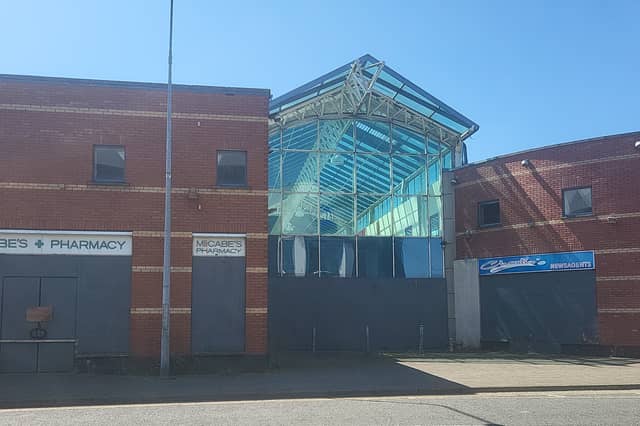

Dundalk was deemed “moderately littered” with just four sites given a Grade A, and the vacant Carroll Village the most heavily littered site surveyed, in the latest IBAL report
Just four sites in Dundalk were given a Grade A, with the town coming in 33rd out of 40 towns and cities in Ireland and was deemed “moderately littered” in the latest survey by business group Irish Business Against Litter (IBAL).
An Taisce, who conduct the surveys on behalf of IBAL, said in its report for Dundalk, that the vacant Carroll Village in Dundalk was “by far the most heavily littered site surveyed in Dundalk” and “ subject to monumental dumping, on a vast scale”, and questioned, “where does responsibility for this site lie?”
The report said that Dundalk's result was “similar” to last year, and highlighted some areas in the town for high praise.
It said that: “Clanbrassil Street was very much deserving of the top litter grade – it has been attractively laid out and well maintained.
“Marshes Shopping centre wasn’t just good with regards to litter but was enhanced with seating around and planting.
“The laneway at Toolfix at Gray’s Lane was much improved compared to previous IBAL surveys – this time it just missed the top litter grade.”
Looking at the Grade A sites in Dundalk, the report said of Clanbrassil Street that: “Many of the premises were brightly painted, some with colourful artwork. Paving looked very well, attractive, fresh and clean. Ornamental tree planting and planted beds are always a welcome addition to any shopping street environment. The overall impression with regards to litter was a very good one.”
It said of Marshes Shopping Centre that: “not only was this shopping centre environment excellent with regards to litter, the whole area was very well presented and maintained.
“Seating area had planting close by and was served by a litter bin directly beside the seats. Planted areas were very well attended. Marshes was very much deserving of the top litter grade.”
The Point Road was also given an Grade A, with the report saying that “this route into Dundalk presents very well – it was fresh and clear of litter with a well-attended impression.”
The R132 Dublin approach road was the fourth site to be given a Grade A. The report said that, “he approach to Dundalk along this route created a very good first impression. The kerbs / pavements / traffic light islands etc. were clear of litter.”
The laneway at Toolfix at Gray's Lane received a Grade B+ and was described as “a much improved site compared to previous IBAL surveys and great to see evidence of on-going works. Fingers crossed that once the area is cleared up it manages to remain so”, as did Park Avenue, with the report saying that “there were too many loose litter items at this residential area for the top litter grade – with a little extra care and attention, this could be achieved”.
The Bring Centre at Tesco Extra received a Grade B, with the report saying that “the area to the front of the recycle bin units was generally clear of litter, albeit some of the units (e.g. brown glass) were very grubby. Items had been ‘stuffed’ between / behind the units, mostly cardboard and plastic bags. Broken glass is hazardous.”
The riverbank at Castletown River Bridge was given a Grade C+. “While litter levels were not quite as pronounced as previous IBAL litter surveys”, the report said, “there was still a heavy presence - main items included plastic bottles, plastic bags, fast-food wrappers, mineral cans and sweet papers.”
Closer to the centre of town, the basements of Nos. 18 / 17 / 16 Francis Street were given a Grade C, with the report saying that “while there was a very slight improvement at this area, it wasn’t significant. Many of the items were food related, but given the significant leaf-fall, it was hard to determine some of the items.”
The lowest grading site in the report however, was the vacant centre at Carroll Village. The report said that: “This was by far the most heavily littered site surveyed in Dundalk.
“This former shopping centre wasn’t just casually littered but subjected to monumental dumping on a vast scale. It is only going to deteriorate further if not addressed. Where does responsibility for this site lie?”
Looking at the report overall, no town or city occupied the “seriously littered” or “litter blackspot” categories at the foot of the IBAL table. Overall litter levels were on a par with last year, with 27 towns deemed clean. Sligo finished ahead of Monaghan and Leixlip, with Waterford – again Ireland’s cleanest city – in 4th spot.
“As the peak season for tourist visitors approaches, we have fewer littered areas than we’ve had at any time in the last 25 years,” commented IBAL’s Conor Horgan.
Once again, the study showed a low number of very heavily littered sites among the 500-plus sites surveyed compared to previous years. “The job’s not done, but across the country, local authorities appear to have upped their game when it comes to tackling persistently littered sites and dumping in our towns and cities.”
The study also revealed a significant increase in cigarette butt litter compared to 2025. IBAL warns that butts are not only unsightly, but are a toxic single-use plastic that can contaminate the marine and land environment.
An Taisce receives funding from the Department of Climate, Energy and the Environment (through the Circular Economy Fund) to support the undertaking of IBAL surveys.