

Dundalk councillors seek progress on local road and active travel projects

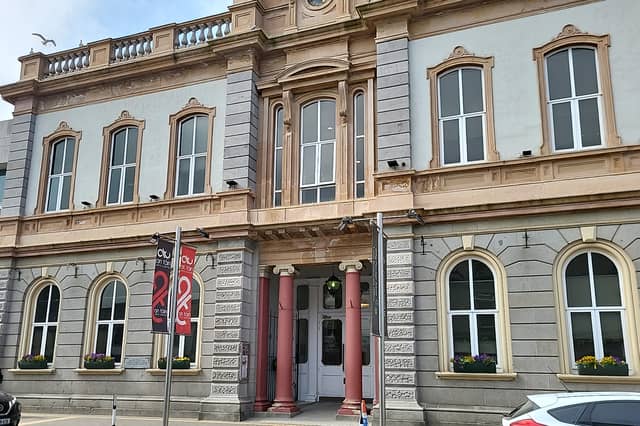

The issues were raised during a recent meeting of Dundalk Municipal District
The September meeting of Dundalk Municipal District saw councillors call for progress on a range of road, active travel and parking issues, with concerns raised over funding delays, unfinished projects and road safety at several locations in the local area.
The issues were raised during a recent meeting of Dundalk Municipal District, where councillors questioned officials on the delivery of transport projects and the availability of funding.
A particular focus was placed on active travel schemes, with councillors expressing frustration that projects can take years to progress through planning and consultation only to remain awaiting funding.
Councillor Marianne Butler pointed to the €800,000 allocated for works at Xerox’s Junction, questioning whether the funding would be spent in time or could ultimately have to be returned to the National Transport Authority (NTA).
She also asked if there were any plans to resurface the Dublin Road, saying that for years they had been told that works would be carried out as part of the active travel scheme and associated works, but that no progress seemed to be forthcoming.
Council officials said the NTA had recently introduced changes intended to speed up the approval process for smaller projects. Under the revised arrangements, certain projects can be progressed with fewer stages of approval, reducing some of the paperwork and procedures involved.
The meeting was told that tender documents were in the process of being finalised and it was the council’s intention to have the Xerox Junction project out to tender “ASAP.”
Council officials acknowledged that funding remains a major issue for transport projects outside the Greater Dublin Area.
The meeting heard that, while the national allocation for transport has increased, significant amounts of funding are being directed towards major projects including MetroLink and BusConnects.
As a result, councils outside the Greater Dublin Area are continuing to work within existing funding allocations while waiting for additional funding to become available.
The proposed changes at the Hoey’s Lane/Dublin Road junction were also raised.
Councillor Maeve Yore said residents had contacted her with concerns about the removal of a left-turn lane from the Dublin Road and sought clarity on how traffic would be managed.
Officials said the left-turn lane had been removed from the plans but that the junction would become fully signalised as part of the wider road scheme.
They said the signalised junction should improve traffic management at peak times and make it easier for pedestrians and cyclists to cross.
A new medical practice on Park Street prompted a request by Fianna Fail Councillor Emma Coffey for consideration of an additional pedestrian crossing.
She said elderly patients, people with buggies and others were having difficulty crossing the road, with the nearest existing crossings considered to be some distance away.
A raised pedestrian crossing, similar to one installed elsewhere in the town, was suggested as a possible solution.
While much of the discussion centred on outstanding work, councillors also praised recent improvements to accessibility and road safety.
Councillor Maeve Yore gave particular recognition to works at Anne Street and Hill Street Bridge, noting that accessibility campaigners had first highlighted issues at the bridge several years ago.
The council teams involved in the works were thanked for improvements that were described as making the town and wider county more accessible.