

Dundalk commercial vacancy rate remains high despite slight improvement

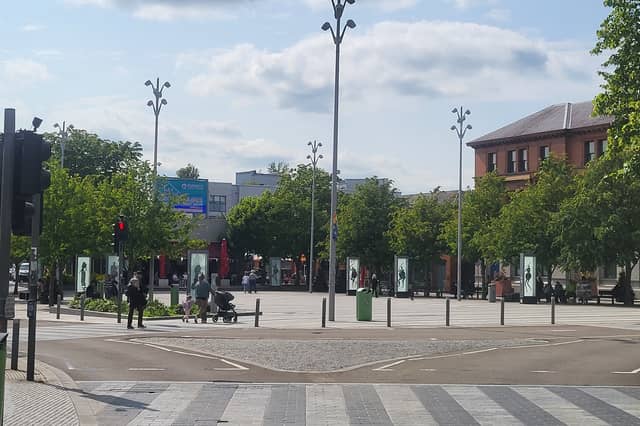

Town’s vacancy rate fell to 19% in 2025, but remains well above the national average
Commercial vacancy in Louth increased slightly over the past year, with more than one in seven commercial properties in the county vacant at the end of 2025.
The latest GeoDirectory Commercial Buildings Report puts Louth’s commercial vacancy rate at 15.1% in Q4 2025, up from 15.0% a year earlier. That compares with a national rate of 14.6%, meaning Louth was marginally above the national average.The report records 4,452 occupied commercial units in Louth with a NACE classification, with services accounting for the largest share at 46.1%. Retail and wholesale made up 24.3%, followed by health at 9.3%, construction at 6.8% and industry at 6.0%.
Dundalk’s vacancy rate stood at 19.0%, down slightly from 19.3% in Q4 2024. The figure remains considerably higher than both the Louth county rate and the national average. Dundalk had 1,288 occupied commercial units with a NACE code, with services accounting for 48.4% and retail and wholesale 26.6%.
The picture was less positive in Drogheda, where the commercial vacancy rate rose from 19.5% to 20.3% over the year. Ardee also saw an increase, from 13.6% to 15.2%.
Accommodation and food services accounted for 541 commercial units in Louth, representing 12.2% of the county’s commercial stock, down by three units on the previous year.
The Louth figures come against a backdrop of a slight deterioration nationally. Ireland’s commercial vacancy rate reached 14.6% in Q4 2025, the highest level recorded since the GeoDirectory series began in 2013.
Sligo recorded the highest commercial vacancy rate in the State at 20.8%, followed closely by Donegal (20.6%) and Galway (18.7%).
Connacht had the highest vacancy rate of the four provinces, at 18.6%, followed by Ulster (17.3%), Munster (14.3%) and Leinster (13.2%).
Meath remained the county with the lowest commercial vacancy rate in the country at 10.0%, followed by Wexford (10.9%) and Westmeath (11.9%).
This report examined a sample of 80 towns throughout Ireland, as well as 22 postal districts in Dublin, to assess the shift in commercial vacancy rates from the fourth quarter of 2024 to the same period in 2025.
Commenting on the findings of the GeoDirectory Commercial Buildings Report, Dara Keogh, CEO of GeoDirectory, said:
"The continued upward trajectory of commercial vacancy rates, which remains at an all-time high of 14.6%, is an indicator of several economic factors which have been developing for a number of years. This includes the increased penetration of online shopping and commerce, along with remote working trends.
“The changing needs of businesses and consumers, and the subsequent impact on commercial property, should be closely considered to ensure the best utilisation of these spaces in the future.”
Commenting on the findings of the GeoDirectory Commercial Buildings Report, Simon MacAllister, Partner at EY, said:
“The latest GeoDirectory Commercial Report finds that commercial vacancy rates have continued to nudge upwards, however this is in the context a large and diversified commercial property base of more than 210,000 units.
“While there are structural challenges in some regions, it is encouraging that nine of the fifteen towns with the highest vacancy levels recorded year on year improvements. This indicates that local efforts to revitalise town centres, along with natural commercial turnover, can have a positive impact.”