

Dundalk Muslim woman talks about her experiences of education system
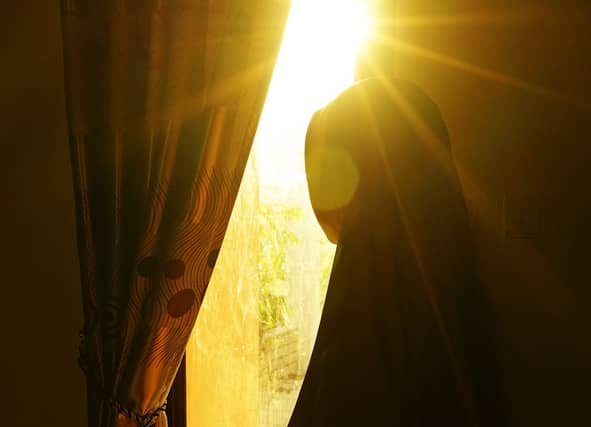

Interview
Despite the early New Year gloom, Mia* enters the cafe in the centre of Dundalk with a smile and a quick wave. She’s wearing her hijab and carrying a handbag. Most people in the cafe are busy with their daily lives, sipping coffee, having a friendly chat with a friend.
As a young Muslim woman living in Dundalk, Mia (19) has a lot to say. However the conversation quickly steers towards her experiences within the local education system - it’s a story which has its positives, but more than a few negatives too.
As a young girl, Mia was raised in a close-knit family hailing from the West African country of Nigeria. She mentions that her early schooling life was a period of genuine happiness and delves into how her primary school experiences helped her in embracing her religion in a wider setting outside of her family life.
“My (primary) school had children of all faiths and the school really embraced this in the best way possible for the development of students,” she explains.
Mia describes how her primary school - here in north Louth - would allow female students to wear their hijab to cover their hair without any uncomforting feelings. She includes her contentment to how her school adapted the school lunch menu to cater for children with specific religious needs, including the exclusion of pork for students of the Islamic faith.
This was a fond memory - small, yet impactful moments that shaped her early exposure to a world outside of her family circle - she recalls while sipping a coffee.
Mia explains that she built a very comfortable relationship with the education system initially, as she felt accepted and included within her primary school, which embraced various different cultures equally.
She adds that she felt as if the acceptance of her school from the age of four to twelve truly helped her emotionally develop within the wider world, without fear of being judged due to her religion even at such a young age.
However, Mia confesses, when she entered a local secondary school it all changed.
“When I was in first year, nobody mentioned that students could wear hijabs until one day I came into school wearing my hijab by accident, because I used to wear it walking into school, take it off when I got in and put it back on when I finished school”.
Mia was told by a member of the school’s staff that she could wear her hijab, once it conformed to the school’s uniform colour code, which she was more than happy to agree to. She says that at the time, it gave her hope that they were taking steps to be more accepting towards her community.
Previously, the 19-year-old says she looked to elder Muslim girls in the school for guidance to see if they wore their hijabs also, to which they did not at that time.
At the time, Mia expressed her frustration about not being told in advance about this, as the school had been aware of her religion from the outset.
This initial exchange with the school would lead to what would become a frequent pattern of difficulty relating to her religious beliefs and the post primary education system.
She remembered that a pinnacle event of the schooling year was the election of the Student Council.
“There had not been one ethnic person elected as head girl, never mind the student council until I left the school six years later,” Mia adds.
Whether this had been intentional or not, she expressed her upset, as she felt it was an act of discrimination towards people of different cultures within the school.
Having attended a predominantly Catholic secondary school, Mia says she felt disheartened discussing the lack of focus on teaching other religions to students in the school.
“The way they teach religion, especially throughout the entirety of first and second year, the only religion that was taught was Christianity”.
Mia recalled how as an exam subject for the Junior Certificate, a focus on various different religions and cultures was to be taught through the curriculum. She found however, that the focus lay on the teachings of Christianity, with little to no insight on other religions until third year.
She explained that she has respect for the teachings of the school, considering the school is predominantly Catholic, however, Mia felt that it was unfair that Islam was only introduced for six weeks out of the entire school year, compared to the two years of education received in relation to Christianity, considering there was a wide Muslim community within the school.
As the conversation draws to a close Mia sums up her experiences in schooling as being relatively positive, although sometimes, she adds, the negatives outweighed the positives when it came to religion. Now aged 19, she believes that she has a greater insight into how people around her view her religious beliefs, which she attributes to her experiences growing up.
Overall, she believes that some people she encountered during her schooling life had a simple lack of insight into wider cultures and religions.
“I respected their beliefs, so why couldn’t they respect my religion?”
*Not her actual name