

Dundalk health worker: ‘It’s hard not to take your work home with you’

“You constantly worry if you finish a shift and someone is unwell, are they going to be OK? Have you done your best to support them or even will they survive, or be there when you return for your next shift?”
Working in the healthcare sector throughout the Covid-19 crisis has caused unprecedented worry among staff in recent times. From fear of patients contracting the potentially deadly virus to worrying if they will pull through if so, it has been challenging for locals on the frontline.
Anna* is a local healthcare professional who has worked with disabled members of the community in a residential setting locally for well over a decade. Speaking to the Democrat this week, the local woman, who is in her mid-40s, speaks about the experiences she has faced working in such a vulnerable setting throughout this pandemic.
Within the residential setting in which Anna works in, there has been a large number of Covid-19 cases, with both staff and residents being impacted. Due to this, staff in the residential setting have had to adhere to extremely strict protocol in order to limit the spread of the virus.
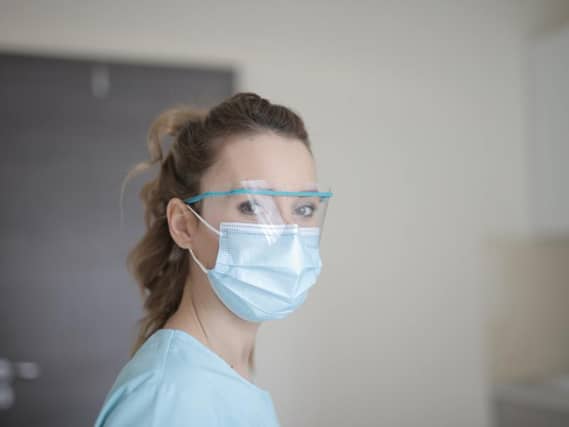
“It's quite stressful at the minute as some clients and a number of staff have tested positive for Covid-19. All our clients are isolating in their rooms and we are using full personal protective equipment (PPE) - gowns, masks, goggles, gloves and hats. We don't get to spend as much time with our clients as we would like as we only have time to do the minimum, personal hygiene, dressing and food and drink”.
Anna says that many of the residents have been emotionally affected by family members being unable to visit throughout the restrictions. Fellow staff members have been finding it challenging to compensate for the lack of social interaction without compromising the safety of both themselves and the residents.
“Going in and out constantly means using the PPE and we have to use it sparingly so as it doesn't run out. We can see some of the clients have become quiet and withdraw and think it could be down to having less social interaction as usual. We try our best to interact as best we can but a lot of times it's impossible as if we are not tending to their physical needs we are trying to keep their home as hygienic and safe as possible”.
Although family members cannot visit the residence throughout the pandemic, Anna says that there has been a conscious effort made to keep the link through technology. Whether it be a simple phone call or a Skype call, residents have been able to keep in contact with family in these challenging times.
“We love them dearly, and at the moment they can have no visitors, so we are their only link to the outside world. It can be quite lonely, but we use phones and Skype on tablets to their families for them to keep up the contact and we also contact family regularly to keep them updated on their loved ones well being.
Due to a number of staff within the setting contracting the virus, on-call and agency staff have been called in order to give the level of care that the residents require, Anna says. Although the extra staff present can be helpful in covering patient numbers, it has also increased pressure among temporary and permanent staff members as they may not be familiar with the setting or residents.
“We have had a large amount of staff out with symptoms of COVID-19 or were sent for testing due to having direct contact with someone - staff or client. We have had a lot of on-call or agency staff come through the clients home due to absenteeism who-through no fault of their own - don't know the place or routine and that in itself puts a lot of pressure on staff to ensure the clients get the correct care and attention they need.”
Fellow staff in Anna’s place of work have been finding the past few weeks quite emotional caring for the most vulnerable members of the community, she says. This has been having an emotional impact on fellow staff as feelings of guilt consume their everyday lives, even outside of the working environment.
“A lot of staff are physically and emotionally drained at this time trying to keep up with everything and to make sure the clients get their basic human needs met. Staff can feel that they are letting their clients down and some even feel extremely guilty that they may have brought this illness into the clients home and made them ill and that's the last thing any carer wants to do. There is an adequate amount of ppe, but we are told to use it sparingly to ensure we don't run out.
Despite the emotional impact in taking care of vulnerable members of the community throughout this pandemic, there has been an overwhelming amount of support from management and among the staff community, she explained.
“Management has been quite supportive - sending out emails with appropriate information on COVID-19, policies and procedures and weekly updates, also commending us on our work.
“Staff are great at supporting one another and message each other to see how they are keeping”.
Thinking of the long term impact serving on the frontline may have on not just herself, but staff across the community and country, Anna feels as if many will develop mental health difficulties post pandemic.
“I think when this is all over, there could be a few cases of post-traumatic stress disorder as at the minute staff haven't got time to think about everything but when it calms down I think staff will look back and wonder could they have done anything differently, have they done their best and also if clients have got ill or passed away - guilt that they may have transmitted the disease to such vulnerable people.”
Keeping the residents safe and well is at the forefront of Anna’s mind, with herself and her colleagues trying their hardest to tend to emotional needs as well as the physical for the vulnerable individuals.
“We are all trying our very best in this current situation but it is extremely hard and stressful at times and we wish we could do more. As long as our beloved clients are happy and as healthy as they can be, then we will continue to do the best as humanly possible.”
Working on the frontline of the Covid-19 fight has had a significant impact on Anna’s mental health, with a constant concern before and after a shift for the well-being of the residents who she cares for each day.
“It’s hard not to take your work home with you but when you are dealing with human life, it's hard not to. You constantly worry if you finish a shift and someone is unwell, are they going to be OK, have you done your best to support them or even will they survive or be there when you return for your next shift.”
Although the current times are challenging for Anna and her fellow staff members, over the years she has built up a significant relationship with many long term residents, which means a lot to the local woman.
“You build up relationships with clients as you work in their home and maybe know a lot of the years so they feel like family to you and also to them”.
The pandemic has not affected Anna’s love for the role that she has devoted many years to, she says, with her motivation and bravery continuing to grow as she, with many healthcare workers locally risking their lives to care for the vulnerable members of the community throughout these testing times.
“I love my job and I feel privileged to be able to care for these people in their home and I hope to continue to do so for as long as I am able or they will have me!”
*Not her real name