

Double murderer who executed two “small-time criminals” in Louth has appeal rejected
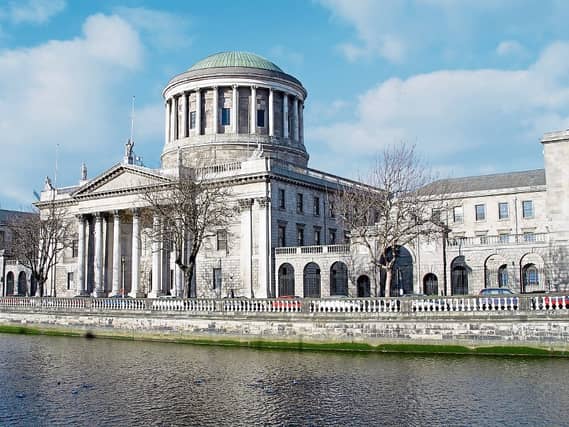

Double murderer who brutally executed two “small-time criminals” in Louth to remain behind bars as appeal rejected
“Callous” double murderer Jason O’Driscoll, who “executed” two men before their bodies were set on fire in Louth 14 years ago, has had his conviction upheld by the Court of Appeal.
O'Driscoll's appeal had focussed on a claim that a prosecution witness’s area of expertise in vehicle identification lacked “scientific validity”.
The court also rejected a contention that the expert showed a "want of independence" when he published a tweet following O'Driscoll's conviction in which he said he was "proud to have helped".
In dismissing the appeal on Friday, Ms Justice Tara Burns ruled that Andrew Wooller of Acuity Forensics had established himself as a person with the necessary “qualifications, knowledge, expertise and experience” with respect to the interpretation of CCTV and was appropriately qualified to give this evidence. She noted that his evidence related to the design, shape, makes and models of cars and how they manifest on video footage.
O’Driscoll (42), of Richmond Avenue, Fairview, Dublin 3, had pleaded not guilty to the murders of 31-year-old Anthony Burnett and 25-year-old Joseph Redmond in Co Louth on March 7th, 2012. The two men died of gunshot wounds to their heads before petrol was used to set fire to a black diesel Volkswagen Golf containing their bodies.
O'Driscoll’s bid to overturn his conviction was reheard last December, having been adjourned earlier that year when it emerged that one of the appeal judges, Mr Justice Patrick McCarthy, had previously presided over his original trial.
After a trial lasting six weeks, a jury in 2017 informed Mr Justice McCarthy it could not reach a verdict. However, following a retrial, O’Driscoll was convicted by a ten to two majority and sentenced to life imprisonment by Mr Justice Michael White in October 2018.
The prosecution relied on circumstantial evidence to convict O'Driscoll of murdering Mr Burnett and Mr Redmond in Co Louth, where they had gone to sell him a stolen car on March 7th, 2012.
At the appeal hearing, O’Driscoll’s lawyers had argued that Mr Justice White erred in refusing to exclude the evidence given by Mr Wooller and that of his colleague Matthew Cass, who were called as expert witnesses in vehicle identification.
Seán Guerin SC, representing O’Driscoll, suggested the area of expertise was “not widely practiced” and therefore “lacks scientific validity”.
It was the prosecution’s case that a stolen Mercedes S Class was involved in a police chase in Newry, Co Down on the evening of March 7, 2012, and that this was the car used in the shootings of the deceased.
The State contended that this vehicle was the “getaway car” from the murder scene and that O’Driscoll was seen on CCTV footage getting out of the vehicle in Meigh that evening. The car was found abandoned on the morning of March 8, 2012.
During the course of the garda investigation, a reconstruction was organised by gardaí for Mr Wooller and Mr Cass.
Mr Guerin said the height of Mr Wooller’s evidence was that the appearance of a vehicle in the footage was “similar to a Mercedes but it could have been another car”.
He also said the analysis was flawed because Mr Wooller himself reviewed the reconstruction footage, meaning it was not a “blind analysis” as he had already formed an opinion from the original CCTV.
Ms Justice Burns said the witness’s evidence related to the design, shape, makes and models of cars and how vehicles manifest on CCTV footage having regard to very many factors, including lighting and weather conditions, colour, speed of travel and light reflection.
She said this evidence was necessary for the jury to interpret the CCTV footage presented for its consideration. Without it, she said, a jury would not have been able to usefully consider the CCTV at all, and as a result “this very relevant evidence” would have been “rendered worthless”.
Ms Justice Burns found that the complaint made with respect to confirmation bias was “simply not made out”.
Mr Guerin also sought to add an additional ground of appeal, arguing during the oral hearing of the case that a tweet sent from the Acuity Forensics twitter account with a photograph of Mr Wooller expressed a “want of independence” publicly and therefore made O’Driscoll’s conviction unsafe and unsatisfactory.
The tweet stated: “So after five years, and two trials a #Dublin jury have today found Jason O’Driscoll guilty of the murders of Anthony Burnett and Joseph Redmond. It’s been a long haul and we’ve spent a long time in the witness box. Proud to have helped.” The tweet also congratulated gardaí.
Mr Guerin said Mr Wooller and Mr Cass offer a commercial service to police forces and “here they are using the conviction of my client effectively as a marketing tool”.
Ms Justice Burns said the ground relating to the twitter post could not lead to the conclusion that O’Driscoll’s trial was unfair.
“The fact of a twitter post after the conviction does not establish a lack of independence on his part,” Ms Justice Burns said, refusing the relief sought to add this ground.
Imposing a mandatory life sentence on O’Driscoll in October 2018, Judge Michael White said that Mr Burnett and Mr Redmond had been "executed in a callous, brutal way".
The deceased were both from Ballybough in Dublin's north inner city and were described by the State as "small-time criminals" involved in car theft.