

Supreme Court reserves judgment in ‘super junior’ appeal
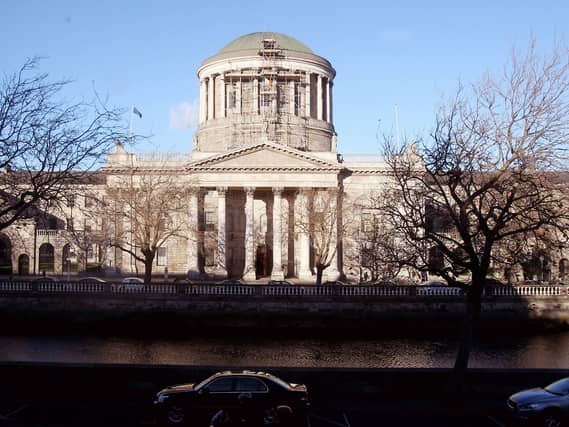

The challenge relates to the presence of so-called ‘super junior’ ministers at Cabinet.
The Supreme Court has reserved its judgment in appeals challenging the lawfulness of the presence of so-called “super junior” ministers at Cabinet.
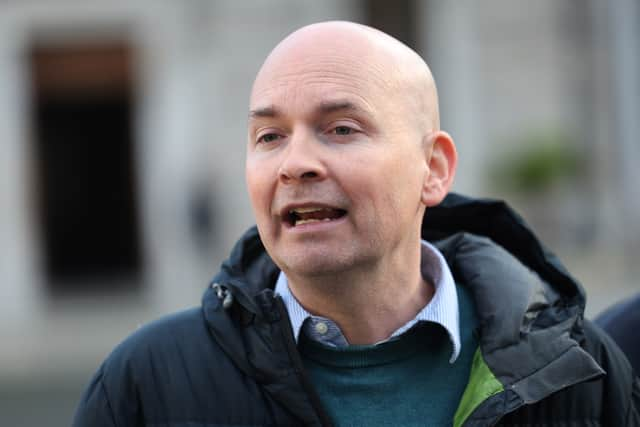
The attendance of several ministers of state at Cabinet meetings chaired by the Taoiseach is the main point of contention in appeals brought by two opposition TDs.
Earlier bids by Sinn Féin Kerry TD Pa Daly and People Before Profit Dublin TD Paul Murphy challenging the practice have been unsuccessful in lower courts.
Mr Murphy has argued the attendance of super junior ministers at Cabinet was inconsistent with Article 28 of the Constitution of Ireland, which says the government “shall consist of not less than seven and not more than 15 members”.
Mr Daly had challenged the Government’s appointment of super junior ministers on the basis that it caused issues for Cabinet confidentiality as well as an issue of expenses and allowances paid.
On the third day of the Supreme Court appeal, Eileen Barrington SC, for Mr Daly, said they were arguing that any government decisions taken with the involvement of super juniors at Cabinet since 1994 – when the practice began – were unlawful.
However, she said they were not challenging any specific decision and were not suggesting that such a declaration would have “retrospective effect to undo years of government”.
Closing his submissions on behalf of the Government earlier in the proceedings, the Attorney General said there may be “a line” at which the attendance of additional people at Cabinet meetings may cause it to lose its essential characteristics of government acting as a collective authority – but that had not been crossed.
Rossa Fanning argued that it is currently politically acceptable that a small number of ministers of state would attend Cabinet given that government has grown in recent decades.
Mr Fanning, who also attends Cabinet as part of his role, said the proposal that the attendance of additional people at the meeting beyond the 15 government ministers was complicated by the entire history of the country since independence.
He pointed to the attendance of the government secretary, attorney general and chief whip in Cabinet meetings.
Using the example of a chief whip who is also a minister of state at a Government department, Mr Fanning said the appellants were asking the court to “draw the finest of distinctions” on whether such a person could attend Cabinet in their first role but would have to “stay outside the door almost” when matters relating to their ministerial brief arose.
Speaking before the seven-judge court, he also raised the example of consultation “outside the room” which is “clearly permissible” and not prohibited under the Constitution.
Chief Justice Donal O’Donnell suggested to the Attorney General that he was also making a “fine distinction” by arguing that additional attendees can take part in discussions but not in votes.
Mr Fanning said it was his view that the super juniors were not contributing to the decision as the power lies with the 15 ministers in government.
He went on to question where exactly a breach of constitutional provisions had happened, arguing that it was not a case of a clear-cut breach.
He said the Constitution does not say in terms that the Taoiseach must chair the meeting – even if it is not an “unreasonable place to land” given the office holder’s position as head of government – nor does it say anything about the frequency, duration, location of the meeting or whether it must be held in person.
Mr Fanning argued the issue was a discussion on how you regulate government meetings and limits posed on the Taoiseach which he said were not found in the Constitution, save for its provisions on collective decisions and confidentiality.
On those issues, he said the provision on collective action does not regulate who attends a Cabinet meeting.
Mr Fanning said the government was ultimately responsible to Dáil Éireann which has the ability to put forward motions of confidence against ministers and the Government.
However, it was noted that the Dáil does not vote on the appointment of the super juniors.
Mr Fanning argued there is a distinction between who attends the meeting and who makes decisions at them.
He told the judges it is “politically acceptable” that a small number of ministers of state attend the meeting as government is now bigger than it was, and that the information on their roles is presented to the Dáil.
He added there was no prohibition of non-members of Government attending the meeting in the clause on Cabinet confidentiality.
He said that the court is entitled to give some guidance for the future on whether there is a line where the meeting loses its essential characteristics as acting as a collective authority responsible for government departments, but said that line was not easily found in the text of the Constitution itself.
Under questioning from the judges, he said the Taoiseach could invite anyone to attend the meeting and that consultations with attendees could also happen outside the room.
Responding to Mr Fanning, Ms Barrington said the super juniors are able to exercise influence due to their access and are involved at the “apex level” of decision making.
She said the “perfect line” to test the matters in the case “flows from the parameters of the Constitution” and that attendees should not be involved in “substantive deliberations”.
She said the 15 members of government defined in the Constitution are those alone who should exercise the executive power of the state.
John Rogers SC – for Mr Murphy and a former attorney general – said the test in the case relates to the seven-to-14 other ministers brought by the Taoiseach to the Dáil for approval, who he said were the people who attend the government to enact its business.
He said the super juniors do not have the approval of Dáil Éireann to be in the government room.
Outside the court, Mr Daly and Sinn Féin leader Mary Lou McDonald said the appeal was about accountability, adding that Constitutional rules should not be “bent for political convenience”.