

Finance Minister says his government will never abolish USC


The Universal Social Charge was introduced as a temporary emergency measure in 2011 during the financial crisis.
The current government will never remove the USC on income, the Finance Minister said.
Simon Harris said the Universal Social Charge will not be abolished in any of the government’s remaining three budgets.
The Tánaiste was on RTÉ Radio 1’s annual budget phone-in special on Wednesday, when he received a question from a listener called David.
“USC was introduced as a temporary measure back in 2011. Why are we still paying it,” the caller asked.

Mr Harris responded: “The honest to God answer is because we now rely on that level of expenditure to fund our country. So, to abolish the USC would cost probably around five billion euro.
“Yesterday’s income tax package was one of the largest in many years. I do worry that if we keep on narrowing the tax base, we’ll actually just end up with the squeezed middle, having to pay more.
“So, on balance, we’re going with bands and credits, and that’s generally the direction we want to take, not just in this budget, but over the three that come after.”

Joining David McCullagh in studio, the finance ministers also had to defend a lack of budgetary measures for single people and people living on their own.
Another caller, Noel said: “I’m 80 years of age. My wife and I worked all our lives, paid our taxes, and when we retired on the state pension, it wasn’t great, but we got by.
“Sadly, eight years ago, my wife died, and our government’s reaction was to half my household income. It went from 486 euro a week to 243 euro.
“Now you could survive that for a week or two, but for it to be a permanent arrangement, it’s not just crude, it’s just not fair. I’m not speaking just for myself, but the thousands of others that would have found themselves in this situation.”
When a three euro Budget 2027 increase to the Living Alone Allowance was mentioned as a reprieve, Noel said: “Please don’t go there, because that in itself is a joke.
“If my lovely wife had survived, she would be receiving 330 euro a week, so the government is saving that, and I’d love to meet the genius that decided actually when first it was mooted in 1977, it was a pound a week, well now it’s 22.”

Public Expenditure Minister Jack Chambers defended the three euro increase.
“I know many people like yourself are under significant pressure, and the specific concerns were reflected in what we’ve tried to do in the budget,” he said.
“I accept that if you look at it in isolation in a single week, it obviously isn’t what many people would expect, but the full year value of living alone allowance is now 1300 euro in 2027. That’s an increase of 14% in this year.”
Another caller, Aoife said she is too young to qualify for the Living Alone Allowance, and there was nothing for her in the budget as a single woman.
“I just want to flag that the narrative in budgets was always on couples and families,” she said.
“Would they consider just mentioning more about single people who are working very hard, who are actually living on their own?
“I have a mortgage, I have bills, I’ve got house insurance, car maintenance. Even if I go on a holiday, I have to pay for the room, everything, I can’t split a lot of costs.”
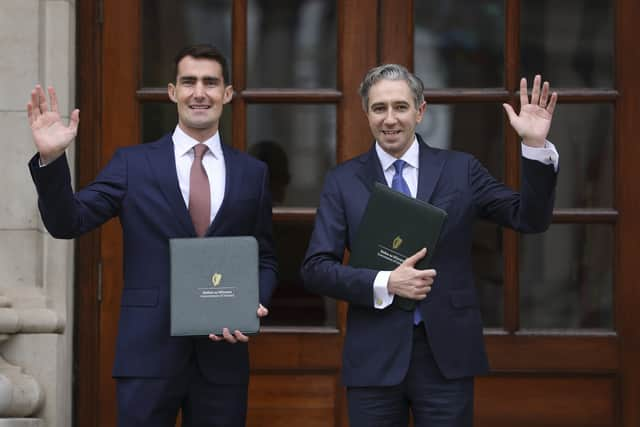
Finance Minister Simon Harris responded: “I will take on board, as with the government, the point you’re making, recognising the fact that there are many people who are in single-income households or living alone of a variety of ages.
“What I would just say though is, the focus yesterday from a tax side, was a tax package of 1.6 billion.
“Over 1.2 billion of that went on income tax cuts, effectively increasing the bands and increasing the credits.”
It was pointed out to Mr Harris that that benefited everyone, so people living alone did not get any extra help.
He said: “I do take the point that we are living through a cost-of-living crisis, and that if you’re heating the house on one income, this cost of heating the house is the same, so I hear you.
“I think there’s limited policy interventions we can consider in relation to what to do there.”