

Listening to residents delivers Safe Routes to School for Knockbridge

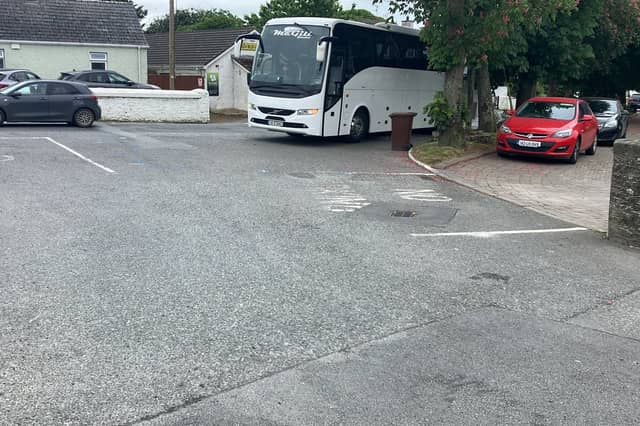

Louth local representative Councillor Robert Nash said that listening to residents has delivered positive changes for the Knockbridge Safe Routes to School project
Dundalk South’s Cllr Robert Nash has said that following a site visit in Knockbridge on Friday morning, and constructive discussions with Louth County Council engineers, he was pleased to confirm that the proposed Safe Routes to School project will now be adapted to address the concerns raised by local residents.
After receiving a number of calls from concerned residents over recent weeks, Cllr Nash said that he requested an on-site meeting so that council engineers could see first-hand the issues and challenges being highlighted by the local community.
Cllr Nash said: “I am delighted that agreement has now been reached on a number of minor alterations to the design that will better accommodate the needs of local people, while continuing to prioritise the safety of schoolchildren and all road users.”
According to the Fine Gael councillor, the revised design will include:
• Removal of the proposed narrowing of the junction, allowing the existing two-way traffic system to remain in place.
• Relocation of the pedestrian crossing further back from the junction.
• Modification of the new kerbing at the church, with the kerb line being swept back by approximately 9 metres to provide additional turning space for vehicles.
• Installation of speed ramps on both sides of the car park entrance to help slow approaching traffic.
Cllr Nash said: “I would like to sincerely thank the Louth County Council Safe Routes to School team for listening to residents’ concerns and for their willingness to make these sensible adjustments.
“These changes demonstrate that it is possible to enhance road safety for our children while also addressing the practical concerns of the wider community.”
He added, “this is a positive outcome for Knockbridge and a good example of what can be achieved through engagement, cooperation, and listening to local voices.”